AI Interior Design for Dark North-Facing Rooms
A north-facing room never gets direct sun. What it gets, all day, is cool, steady, slightly blue light, which is why painters covet north-facing studios and why the rest of us stand in our living rooms at noon wondering why the "warm white" walls look like wet concrete.
The internet's answer is a thousand articles about paint colours. The more useful answer is to see your own room, in its own light, wearing five different palettes before you commit to any of them. That is a job AI is genuinely good at, provided you correct for its optimism.
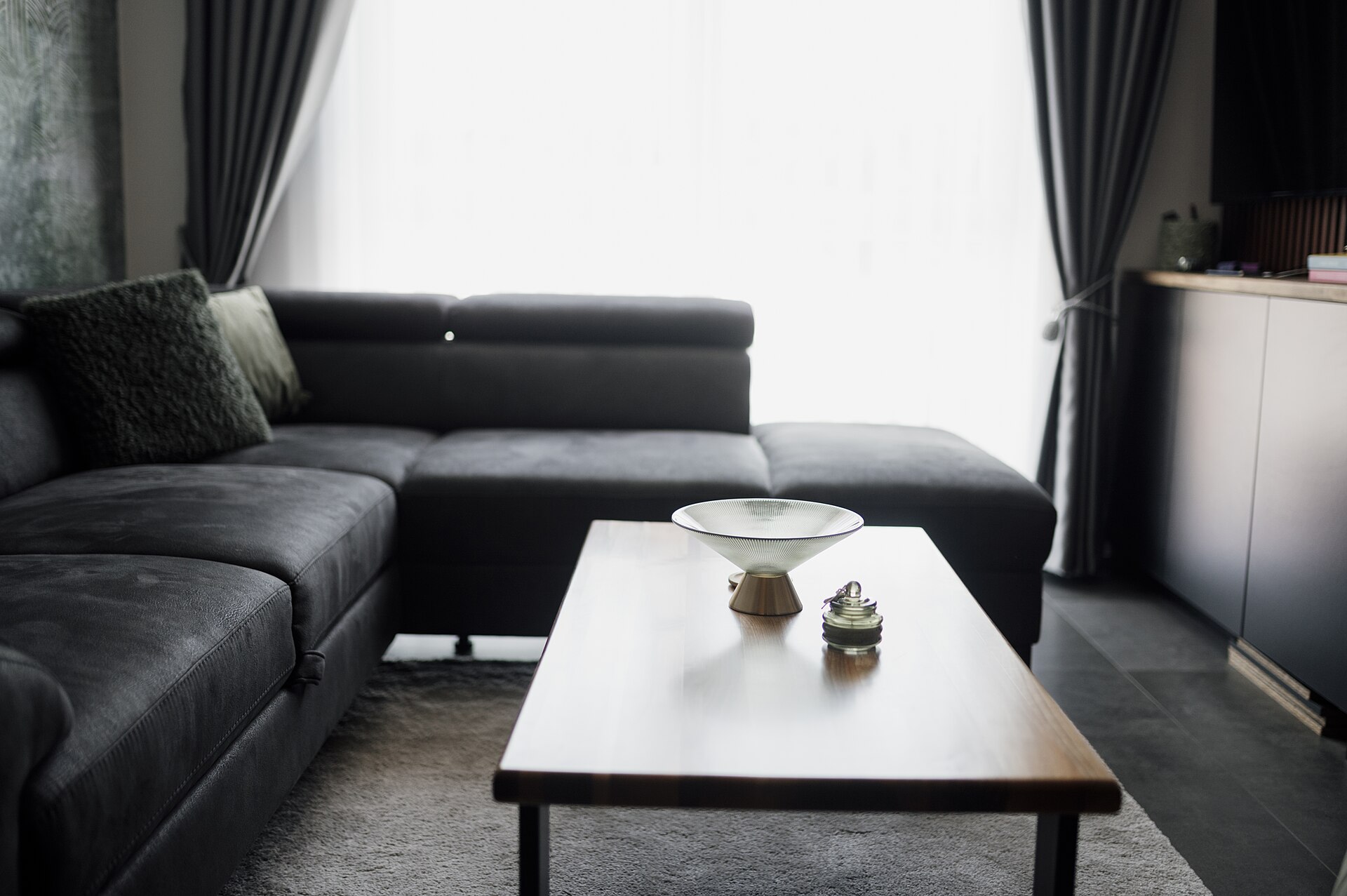
The north-facing signature: one bright window, and a room that stays dim around it all day. This photo, not a sunny fantasy, is what the AI should be restyling.
The over-lighting bias, and how to beat it
Ask a generator for "a cosy living room" and you will get golden hour. Every time. The training data is saturated with rooms photographed by professionals with supplementary lighting, shot at flattering times of day. Your room at 2pm in November is barely represented.
This matters because the whole problem of a north room is the light. A render that silently fixes the light has not designed your room, it has designed a different room.
Three corrections that work. First, photograph the room at midday on an overcast day, no lamps on, and let the photo be as dull as the room really is. A restyle anchored to that photo inherits its honest light. Second, ask for the style in flat daylight terms, overcast light, no direct sun, rather than cosy or golden. Third, generate an evening version with lamps on as a separate render, because a north room lives two lives and the after-dark one is the easier one to make beautiful.
What actually survives north light
This is the niche knowledge that separates a nice render from a nice room, and you can use AI to test every line of it against your own walls.
Brilliant white is a trap. It seems logical, maximum reflection for minimum light. But bright whites lean blue, and in already-cool light they read cold and grey. The working range for a north room is a warm off-white to mid-tone with light reflectance somewhere around 55 to 70, strong enough to bounce light, warm enough not to curdle in it.
Undertones decide everything. In north light, whatever undertone a colour has gets amplified toward cool. Greys go lilac, cool beiges go green, blue-whites go icy. Colours built on yellow, red or brown undertones hold their warmth. This is why the same greige is beloved in one house and hated in the next.
Finish is a lever. Dead-matte surfaces absorb light, a soft sheen returns some of it. In a bright room nobody notices, in a starved room it is measurable.
Or refuse the fight. The other legitimate answer is to stop chasing brightness and go deep, a rich warm dark that makes the room a den on purpose. This is precisely the decision a render is best at previewing, because it takes real nerve, and seeing your own room in deep green with lamps glowing is much cheaper than doing it wrong.
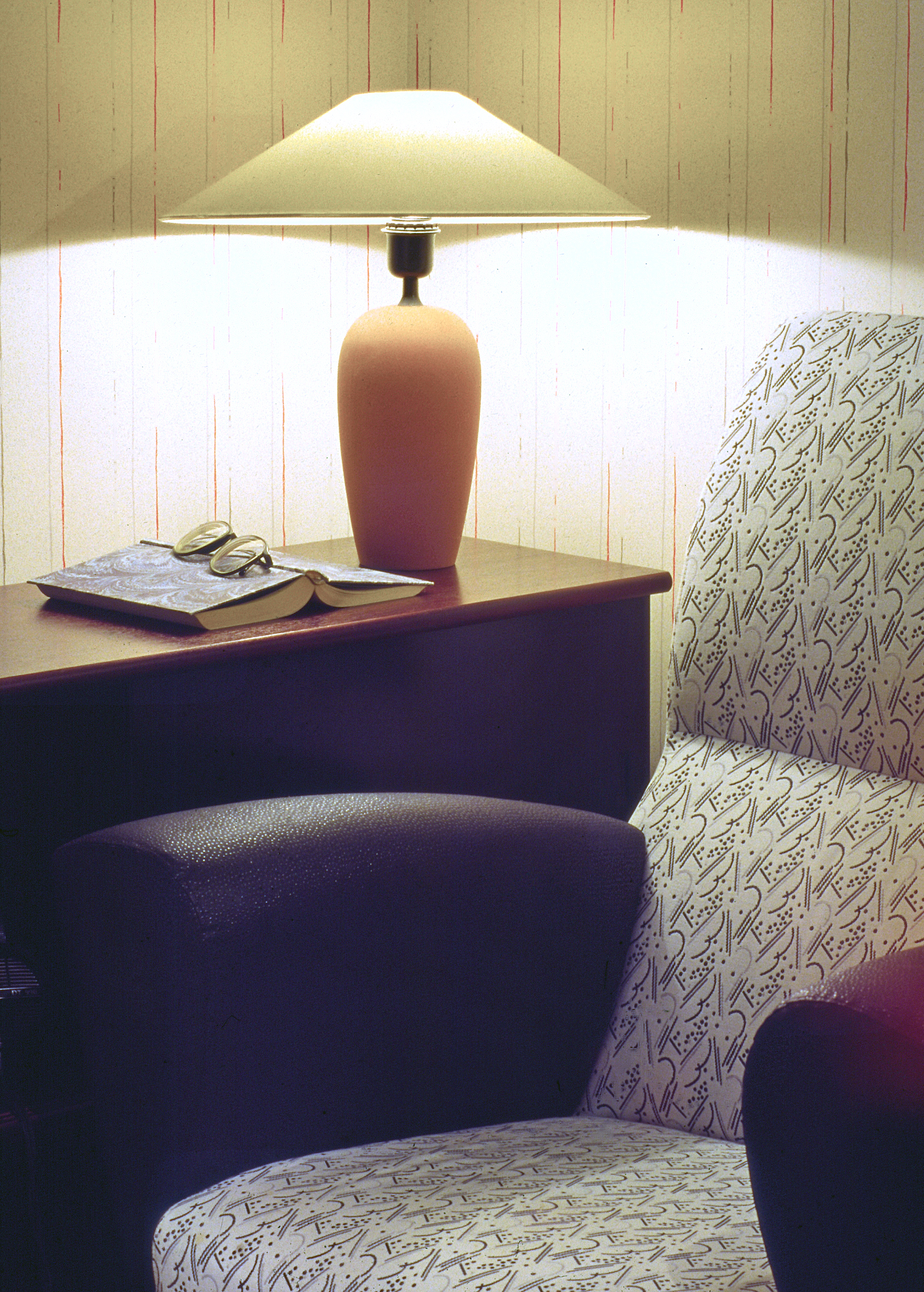
The evening life of a north room: pools of warm lamplight. Ask the AI for this render too, because this is the version of the room you will see most from October to March.
Layout moves the light around
Colour gets the headlines, but placement does quiet work, and layout previews are exactly what a photo-based restyle can show you.
Put the mirror on the wall perpendicular to the window, not opposite it, so it catches and redirects the sideways light instead of reflecting the dim back wall at you. Keep the window itself naked or nearly so, because in a north room every centimetre of glass matters and a heavy curtain stack can eat a fifth of it. Pull furniture off the window wall so the deepest part of the room stays walkable and lamp-lit rather than becoming a dark shelf. And plan three separate pools of warm light for the evening, reading, table, corner, rather than one ceiling fixture that flattens everything.
If you rent the room rather than own it, nearly all of this survives a deposit inspection, and we wrote a full guide on AI interior design for renters with the reversible-only version of the playbook.
One caution if the north room is where you work. The render's invented sunshine is exactly the light you must not plan a desk around, and the position that survives a real November afternoon is the one with the window to the side of the screen rather than in front of it, which we set out in AI home office design.
The render shows you the room on its best day. A north-facing room's real design test is its worst day, so photograph that day and design for it.
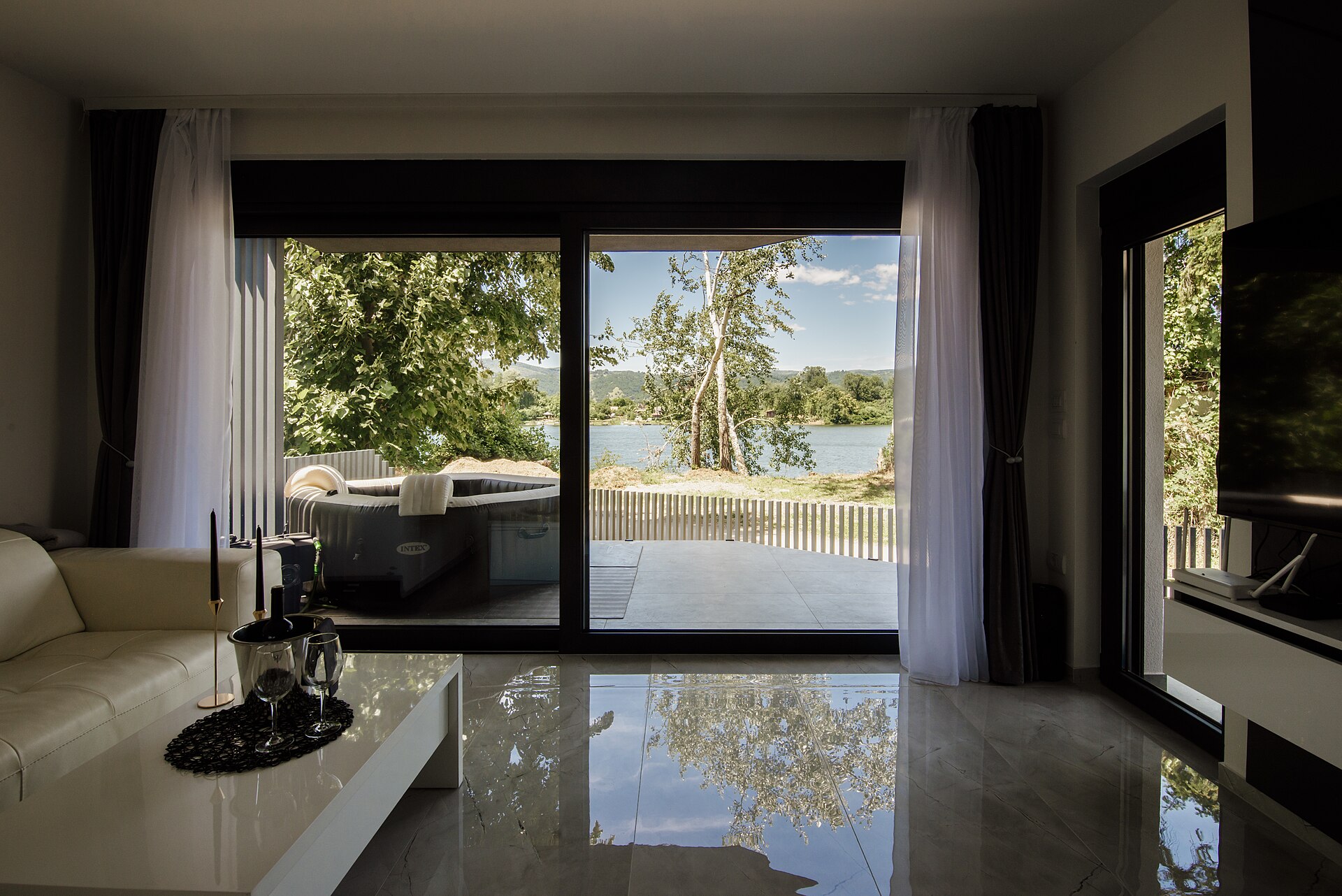
What most training photos look like: big glass and direct daylight. If your render resembles this and your room does not, discount the render, not your room.
Questions people ask about dark rooms and AI
Why does my AI render look brighter than my actual room?
Because the model's training data is full of professionally lit interiors, it defaults to adding light your window cannot supply. Feed it an honestly dull midday photo, ask for overcast light in the style, and compare the render side by side with your original photo. Whatever brightness the render gained beyond the original is fiction. We keep a standalone answer on why AI renders look brighter than the real room.
Can AI pick the exact paint colour for a north-facing room?
It can shortlist a direction, warm white versus greige versus deep green, but not the exact tin. Screens are backlit and calibrated differently from walls, and a render cannot capture how a specific paint's undertone shifts in your specific light. Use the AI to choose the direction, then buy two or three sample pots and paint A4 patches on the window wall and the back wall, because the same colour will behave differently on each.
Is painting a north-facing room white a mistake?
Bright, cool whites usually are, because they amplify the blue in the light and read grey. Warm whites and soft off-whites work. If the room stays stubbornly cold, the braver and often better move is a warm mid-tone or a deliberate dark scheme with layered lamps.
Can AI show my room at night with lamps on?
Yes, and you should ask for it explicitly as a second render, evening scene, warm lamplight, no daylight. A north room spends most of the year lived in after dark, so judging a palette only in a daylight render is judging the room by its rarest state.
The honest position: AI will not brighten your north-facing room, and any render that suggests otherwise is showing you someone else's light. What it will do, faster than any other method, is let you audition warm palettes, dark schemes and lamp layouts on your own four walls before you spend anything. Discount the sunshine, keep the ideas.
If your difficult room is awkward in shape rather than in light, see our companion piece on AI interior design for sloped ceilings and attic rooms, and for the wider landscape, the best AI interior design tools. Since a north room lives most of its life after dark, the two pieces that follow naturally from this one are AI interior design for lamps and lighting and, because greenery in a north room is a light problem before it is a styling one, AI interior design with plants and planters. Wall colour is the other decision a north aspect quietly controls, and renders are least trustworthy about exactly that, which we take apart in AI paint colour visualisers.
Want AI previews built into how you or your clients make design decisions? Book a free call and we will map out where it pays off fastest.
Image credits: "Cozy living room with a gray sofa" and "Modern living room with large windows showing view of trees and lake in daylight" by Shixart1985, licensed CC BY 2.0; "Reading corner with armchair and lamp" by Kotivalo, licensed CC BY-SA 3.0, via Wikimedia Commons.