Can AI Put Real Furniture Into a Photo of My Room?
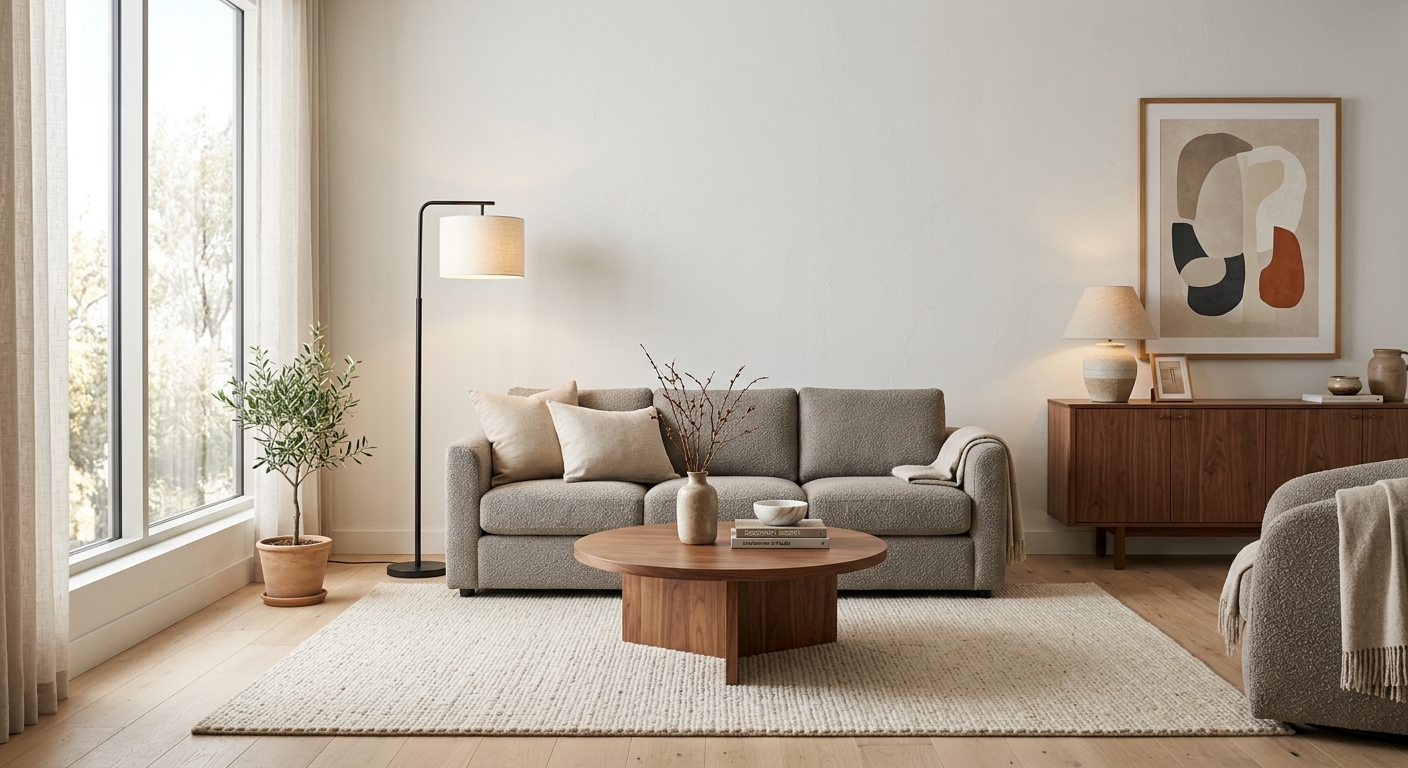
There is a moment that ruins most AI interior design tools. You get back a gorgeous room, you fall a little in love with the sofa, and then you realise you cannot buy it. It does not exist. The AI made it up.
That gap, between a pretty picture and something you can actually purchase and place, is the whole problem. And it is exactly what a smaller group of tools has started to close. Instead of dreaming up furniture, they put real products into a photo of your real room, at the right size. Here is how that works, why the scale part matters more than it sounds, and where the honesty line still is.
Every piece here is meant to be an actual, purchasable product, placed at real-world scale. That is the difference between inspiration and a plan.
What most "AI interior design" tools actually give you
Strip away the marketing and the common tools do one thing: they restyle your photo into a mood. You pick "Scandinavian" or "warm minimal," and the AI repaints the room with invented furniture that fits the vibe.
That is genuinely useful for early ideas. It is a fast way to answer "what would a different look even feel like in here." But the output is a feeling, not a shopping list. The sofa is a hallucination. The measurements are made up. Ask for the same room again and half the furniture changes. You cannot brief a delivery around it.
So the question people really ask is the next one: can AI show me furniture I can actually buy, in my actual room?
How AI places real furniture into your room photo
The tools that do this work in a different order. Rather than inventing decor to match a style, they take two real inputs and combine them.
- A photo of your real room. Your walls, your window, your light, your floor.
- A specific product. A reference image of an actual sofa, chair or table, ideally with its real dimensions.
The AI then composites that product into your room with the correct perspective, and, crucially, the correct scale, using the product's real measurements to work out how big it should appear against your space. Done well, the result reads like a photograph of that exact sofa sitting in your exact room, with believable contact shadows where it meets the floor.
This is the approach we built into MeltFlex AI: you can feed it a room photo and real catalogue products, and it matches each item's colour, material and proportions and places it to scale, rather than conjuring something generic. It is the difference between "here is a vibe" and "here is that specific piece, in here, at the right size."
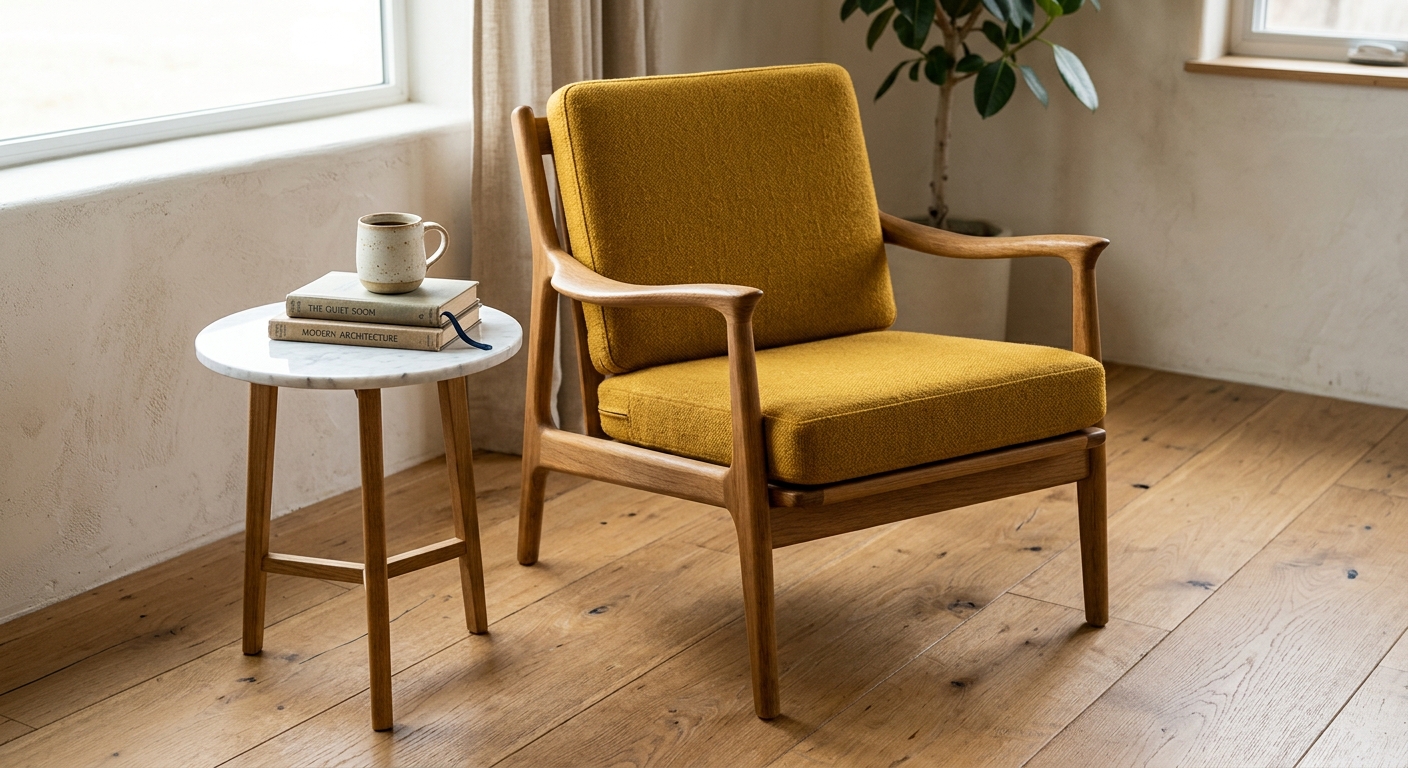
The tell of a good result is the boring part: the legs meet the floor, the shadows land right, and the piece is the size it would really be.
Why "to scale" is the part that matters
It is tempting to think the win here is realism. It is not. It is scale.
Almost everyone gets furniture size wrong on paper. A sofa that looks perfect in a showroom swallows a small living room. A rug you were sure was huge lands like a bath mat. The single most common furniture regret is a piece that simply does not fit the room, physically or visually.
Placing a real product with its real dimensions into your room is what catches that before the delivery van does. You are not testing whether you like the sofa. You are testing whether that 220cm sofa leaves room to walk past it, whether the sideboard fits under the window, whether the dining table lets chairs pull out. That is a different, more useful question than "does this look nice," and it is the one that saves you money.
Where it still is not magic
This is the part the demos skip, and it is the part that keeps you out of trouble.
A to-scale visualisation is an excellent guide. It is not a guarantee. The AI is estimating your room's geometry from a photo, so it can be slightly off, especially in a tilted or wide-angle shot. It will not know about a radiator, a skirting board detail, or a door that swings into the exact spot you want the armchair.
So treat it as what it is: a very good preview that dramatically lowers the odds of a wrong buy, sitting alongside, not instead of, a tape measure. The workflow that actually works is simple. Preview the real product to scale, love it or rule it out, then confirm the real measurements against your real room before you click buy.
The goal is not a prettier picture of your room. It is buying the right thing once, instead of the wrong thing twice.
Who gets the most out of this
A few groups feel the difference immediately.
- Anyone furnishing a room from scratch, who wants to commit to real pieces without the guesswork.
- Small furniture and homeware brands, who can show a shopper their exact product in a believable room instead of a stock studio shot.
- Property and staging teams, who want staged photos built from furniture that actually exists and could actually be placed.
The common thread is that all of them care about a real product, not a mood. That is the line between a toy and a tool.
Questions people ask us
Can AI show real furniture I can actually buy in my room?
Yes. Unlike most restyling apps that invent decor, some tools composite a specific, real product into a photo of your room using the product's own image and dimensions, so what you see corresponds to something you can purchase. MeltFlex AI is built this way.
How does AI get the furniture size right in my room?
It uses the product's real-world dimensions to work out how large it should appear against the geometry it reads from your room photo, then places it with matching perspective and shadows. That is what makes a piece look genuinely to scale rather than pasted on.
Is AI furniture placement accurate enough to buy from?
It is accurate enough to rule pieces in or out with confidence, and to catch a size mistake before it arrives. It is not a substitute for a tape measure, though. The safe habit is to preview to scale, then confirm the real measurements against your room before ordering.
What is the difference between this and RoomGPT-style tools?
Style-first tools like the popular room restylers repaint your space with invented, unbuyable furniture, which is great for inspiration. Product-first tools place real, specific items to scale, which is what you need when you are actually deciding what to buy.
Do I need the exact product dimensions for it to work?
You get a usable result without them, but dimensions are what unlock true-to-life scale. With the real measurements, the tool can show you whether that exact piece fits, not just whether it suits the look.
So the honest answer is yes, AI can now put real, buyable furniture into a photo of your room, at the right size. The magic is not that it looks real. It is that it stops you buying the wrong sofa.
Real furniture is just one piece of it. The same photo-first approach also redesigns a home's exterior from a single photo and turns a still into a moving video walkthrough.
Want to turn "see a real product in a real room" into a repeatable part of how your team sells or stages? Book a free call and we will map out where it pays off fastest.