Can AI Redesign a House Exterior From a Photo?
 Matúš Koleják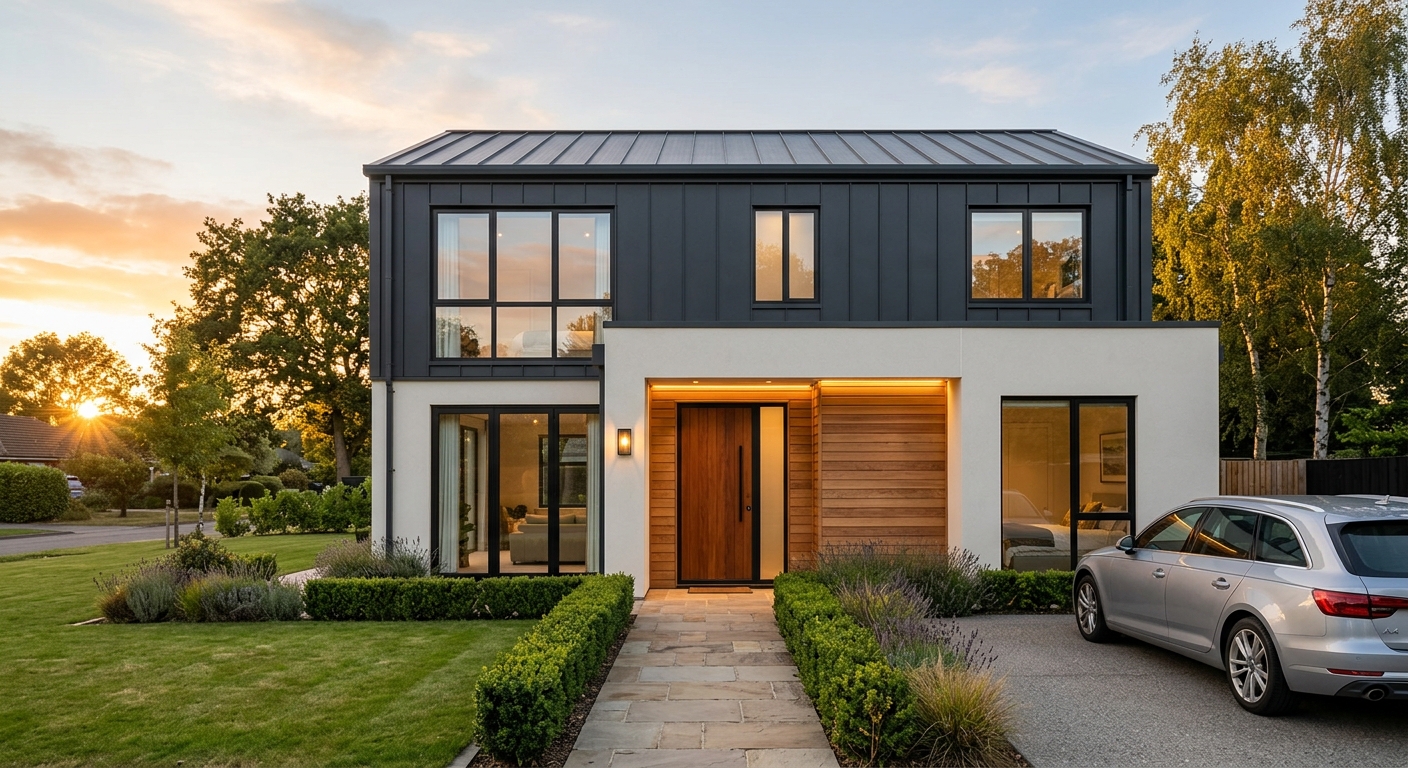
Everyone judges a house from the outside first. Buyers decide in seconds from the listing photo, and homeowners stare at the same tired facade for years without being able to picture it any other way.
That is the frustration AI exterior design solves. Upload one photo of the front of a house and you can see it with dark cladding instead of tired render, a warm timber entrance, new window frames, a different roof, or a completely replanted front garden, all before a single quote is booked. Here is how to actually use it, what it is genuinely good at, and the important line where a pretty render stops being reliable.
An AI "after": new cladding, a warm timber entrance and structured planting. Seconds to generate, and enough to know if a direction is worth pricing.
What AI exterior design actually changes
Point it at the front of a house and these tools rework the surface, convincingly.
- Cladding and render: swap pebbledash for smooth render, timber, brick slips or dark standing-seam panels.
- Colour: test wall colours, door colours and window-frame finishes against the real light on the real house.
- The entrance: a new front door, a canopy, lighting, a reworked path.
- The roofline: different tiles, a darker roof, or a cleaner modern profile.
- The garden: replace a patchy lawn and cracked driveway with structured planting, new paving and a proper entrance.
Tools built for this, MeltFlex AI among them, restyle the surface of a property from one photo, the walls, the entrance, the roof and the front garden, while leaving the structure they cannot see untouched.
The reason this matters: the outside of a house is the hardest thing to imagine changed. A visual turns "I think a darker colour might work" into a picture the whole household, or a whole sales team, can actually react to.
Why the "before" photo is where it all lives
The single biggest lever on quality is the photo you start from. Good input, believable result. Bad input, obvious fake.
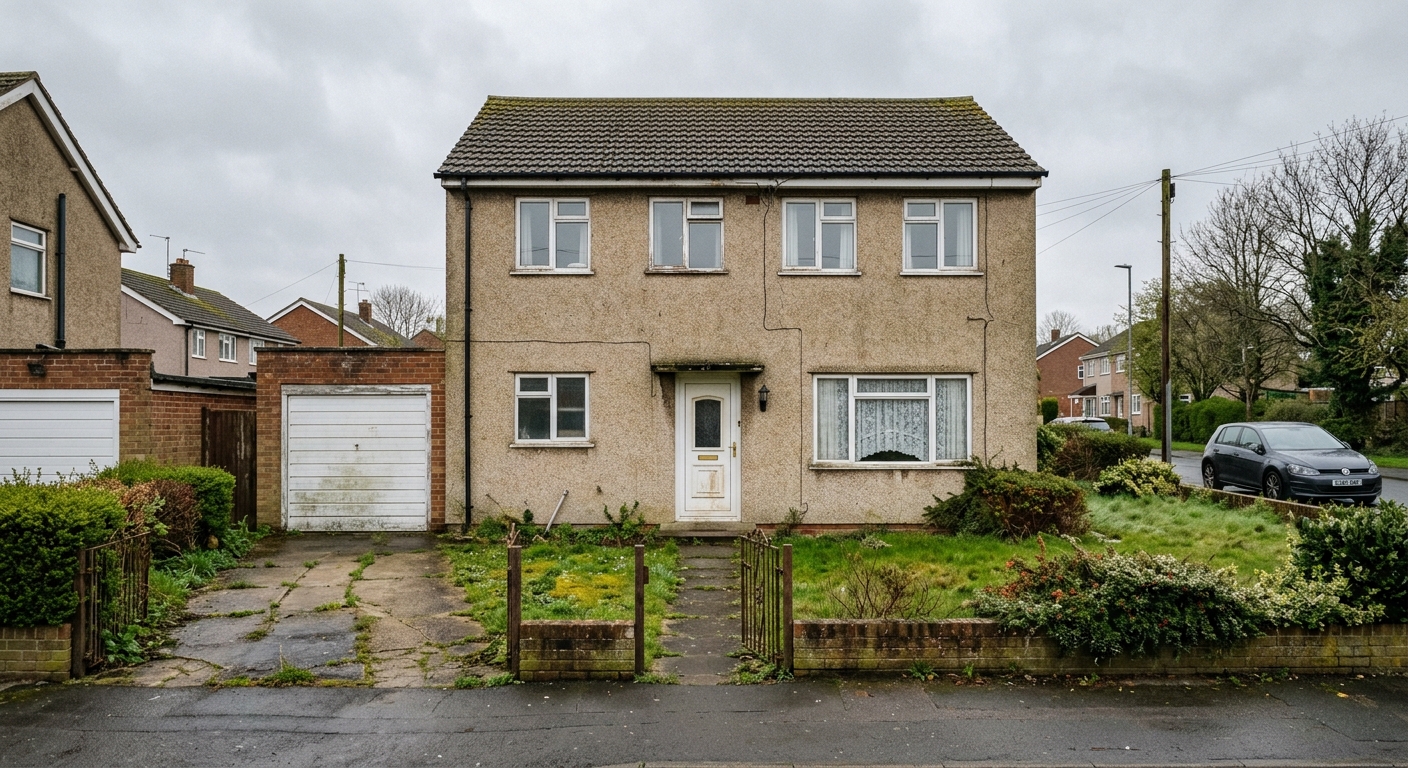
The honest "before." A straight-on, evenly lit shot like this gives the AI a clean base to restyle. A tilted, shadowy snap does not.
A few habits make a real difference:
- Shoot straight on, square to the facade, so walls stay vertical.
- Use flat, even light. Overcast is your friend. Harsh shadows confuse the result.
- Get the whole house in, with a little breathing room around it.
- Clear the frame of parked cars, bins and open gates where you can.
Do that, and the restyle has honest geometry to work with, which is what keeps the "after" from looking pasted together.
What it is genuinely great for
There are three jobs where AI exterior design earns its keep straight away.
Testing curb appeal before you sell or renovate. Seeing three exterior directions on your actual house, in seconds, is the cheapest possible way to decide whether a refresh is worth the money.
Selling the idea to other people. A render aligns a couple who cannot agree, or lets a builder and client argue about a picture instead of words. It collapses the vague "trust me, it will look good" into something everyone can see.
Landscaping and entrance ideas. The front garden is often the highest-return, lowest-risk change, and it is the one people find hardest to picture. AI makes it obvious.
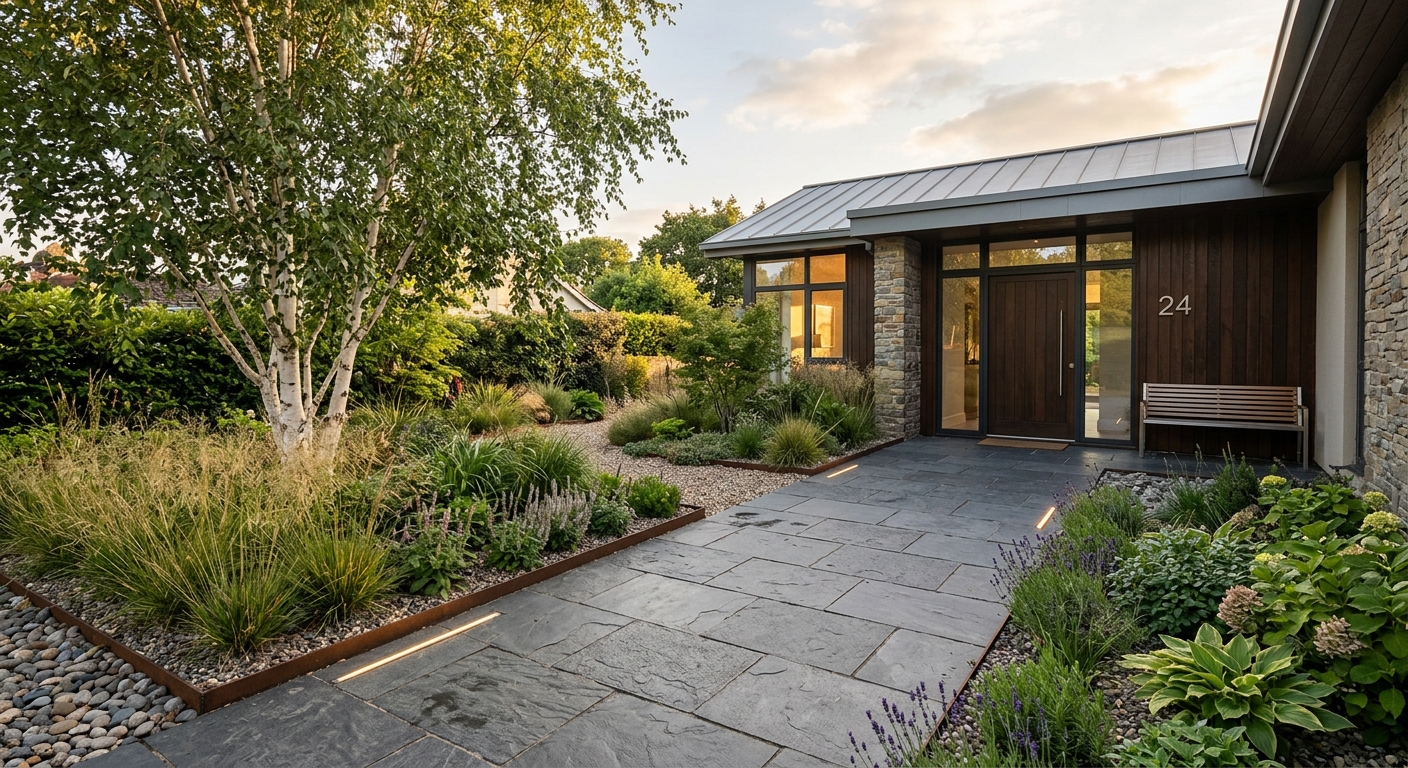
The front garden is usually the cheapest way to lift a whole property. It is also the change people struggle most to imagine, which is exactly where a visual pays off.
The limits you cannot ignore
This is the part that keeps you honest, and it is the part the demos never mention.
AI sees the surface, not the structure. It will happily show you a new bay window, a removed chimney or an extended porch without any idea whether the wall can take it, whether it needs planning permission, or what it would cost. The render is a mood, not an engineering drawing or a quote.
There is also a real-estate honesty line. If you are marketing a property, an AI exterior "after" is a renovation idea, not a picture of the house as it stands, and presenting it as the latter misleads a buyer. The safe habit is the same as with virtual staging: label a restyled exterior clearly and keep the real photo alongside it.
So the workflow that works looks like this: generate a few directions to find the one worth pursuing, then hand that image to a builder, architect or planner to tell you what is actually possible and what it costs. The AI narrows the idea. A human confirms it is buildable.
AI can show you a beautiful version of your house in seconds. It cannot tell you whether you are allowed to build it. Keep those two jobs separate.
Questions people ask us
Can AI redesign the outside of a house from just one photo?
Yes. From a single straight-on photo, AI can restyle cladding, render colour, the front door, window frames, the roofline and the front garden, and return a photorealistic version in seconds. MeltFlex AI includes exterior and garden restyling of this kind.
Can I change my house colour with AI before painting?
Yes, and it is one of the best uses. Testing wall, door and trim colours against your real house in its real light is far more reliable than a paint chip, and it costs nothing to try several before you commit.
Is an AI exterior render accurate enough to build from?
No. It shows a convincing look, not a buildable plan. It has no view of your structure, budget or local planning rules. Use it to choose a direction, then have a builder or architect confirm what is actually possible.
Can I use an AI exterior redesign in a property listing?
Only if you are honest about it. An AI "after" is a renovation idea, not the current state of the house. Label it clearly as a visualisation and keep the real photo alongside, so no buyer is misled.
What makes an AI exterior redesign look fake?
Almost always a bad input photo: a tilted angle, harsh shadows, or a cluttered frame. Shoot square to the house in flat, even light with the whole facade visible, and the result holds together far better.
So the honest answer is yes, AI can redesign the outside of a house from a photo, and it is a brilliant, cheap way to decide what is worth doing. Just remember what it can see. It restyles the surface beautifully. It cannot tell you whether you can build it, and that difference is the whole game.
Exteriors are one half of the picture. The same photo-first approach runs across the wider set of AI interior and design tools, from placing real furniture inside a room to turning a still into a moving video flythrough.
Want to build exterior and garden visualisation into how your team plans or markets properties? Book a free call and we will map out where it pays off fastest.