Standard Table Height: Coffee, Dining, Desk, Nightstand
 Matúš Koleják
Illustrations generated with AI by MeltFlex from reference interiors. They are not to scale; the measured drawing and charts below are.
Furniture heights look standardised until you try to match two pieces. The dining table is easy, because every maker builds to the same number. The coffee table, the side table and the nightstand are not, because each one is supposed to relate to something else in the room: a seat, an arm, a mattress.
This guide gives the usual rules, says who they come from, and then checks them against what is actually for sale. We read dimensions from product pages; we did not measure furniture with a tape. Where sources disagree, we show the disagreement instead of picking one number and calling it the standard.
Standard table heights at a glance
| Table | Usual rule | What 733 listings measure (median, middle half) |
|---|---|---|
| Coffee table | 16 to 18 in, or 1 to 2 in below the sofa seat | 16 in (15 to 17) |
| Side or end table | Level with the sofa arm or slightly below | 22 in (19 to 24) |
| Nightstand | Level with the top of the mattress, 24 to 28 in | 24.2 in (23.25 to 26) |
| Dining table | 28 to 30 in | 30 in (29.5 to 30) |
| Desk | 28 to 30 in | 29.9 in (29.5 to 30.3) |
| Console table | 28 to 32 in | 31.5 in (30 to 32) |
| Counter height table | 36 in | Not measured |
| Bar height table | 42 in | Not measured |
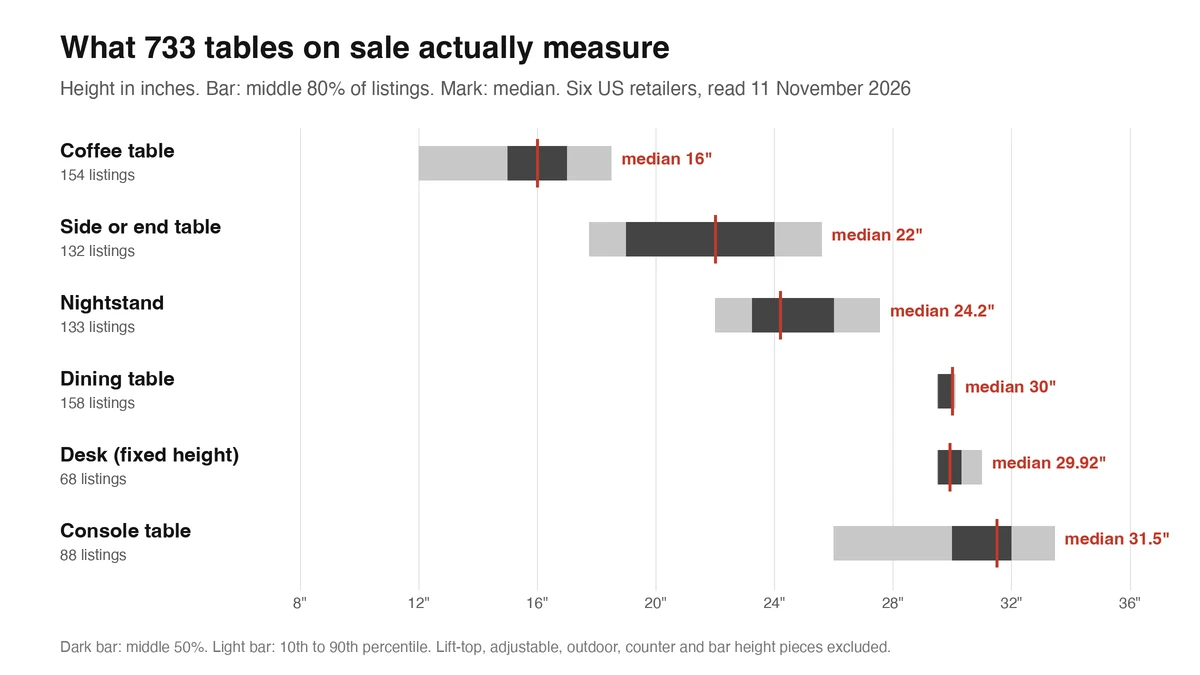
Chart by MeltFlex from product pages at six US retailers, 11 November 2026.
The chart shows the real pattern. Tables you sit at (dining, desk) are built to one height with almost no spread. Tables you sit beside (coffee, side, nightstand) vary by six inches or more, so those are the ones worth measuring for.
Coffee table height
The rule you will read everywhere is that a coffee table should be 16 to 18 inches high, or level with the sofa seat to 2 inches below it. Bob Vila, Ashley and the designer Kyle Schuneman all give a version of it.
Other sources are looser, and it is worth knowing how much:
| Source | Coffee table relative to the seat |
|---|---|
| Ashley, Bob Vila | Same height to 1 to 2 in lower |
| Chairish, designer Laurel Bern | 1 to 4 in lower |
| Castlery | About 2 to 4 in lower |
| Ideal Home (quoting UK retailers) | A couple of inches lower; more than 3 to 4 in lower "may feel awkward" |
| Castlery, Ideal Home | 18 to 22 in is fine if you eat or work at it |
So the honest version of the rule is: between level with the seat and 4 inches below it, and lower is safer than higher.
What the listings show
We read the height of 154 coffee tables and the seat height of 125 sofa models.
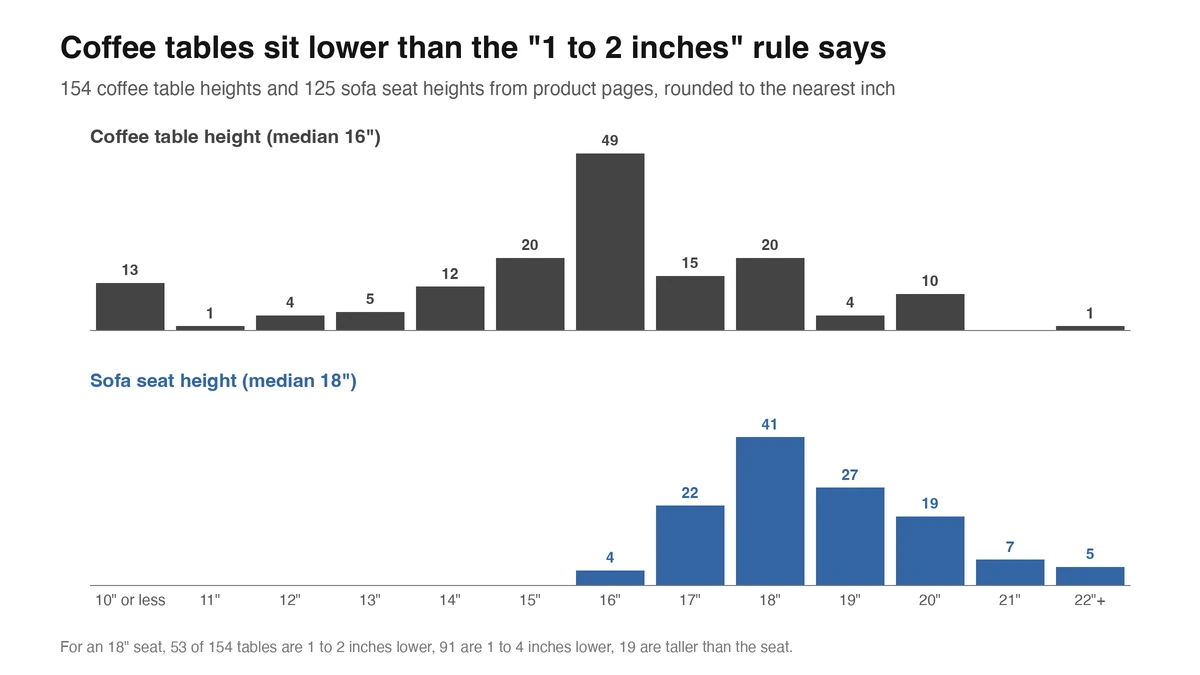
Chart by MeltFlex from product pages, 11 November 2026.
- The median coffee table is 16 inches. Half fall between 15 and 17.
- The median sofa seat is 18 inches. Half fall between 17.5 and 19.
- Only 71 of 154 tables (46%) are inside the "standard" 16 to 18 inch band. 64 (42%) are lower than 16.
- Against an 18-inch seat, 53 tables (34%) are 1 to 2 inches lower, 91 (59%) are 1 to 4 inches lower, and 19 (12%) are taller than the seat.
In other words, the market follows the looser rule, not the strict one. If you own a typical 18-inch sofa and buy a typical 16-inch table, you land 2 inches below the seat, which every source above accepts. The combination to avoid is a low table with a high seat: 26 of the tables are under 14 inches, and next to a 20-inch seat that is a 6-inch drop, which means leaning well forward for a cup.
Measure your seat first. Sofa listings give seat height with nobody sitting on it. A soft cushion drops an inch or more under load, which is one more reason the lower end of the range works.
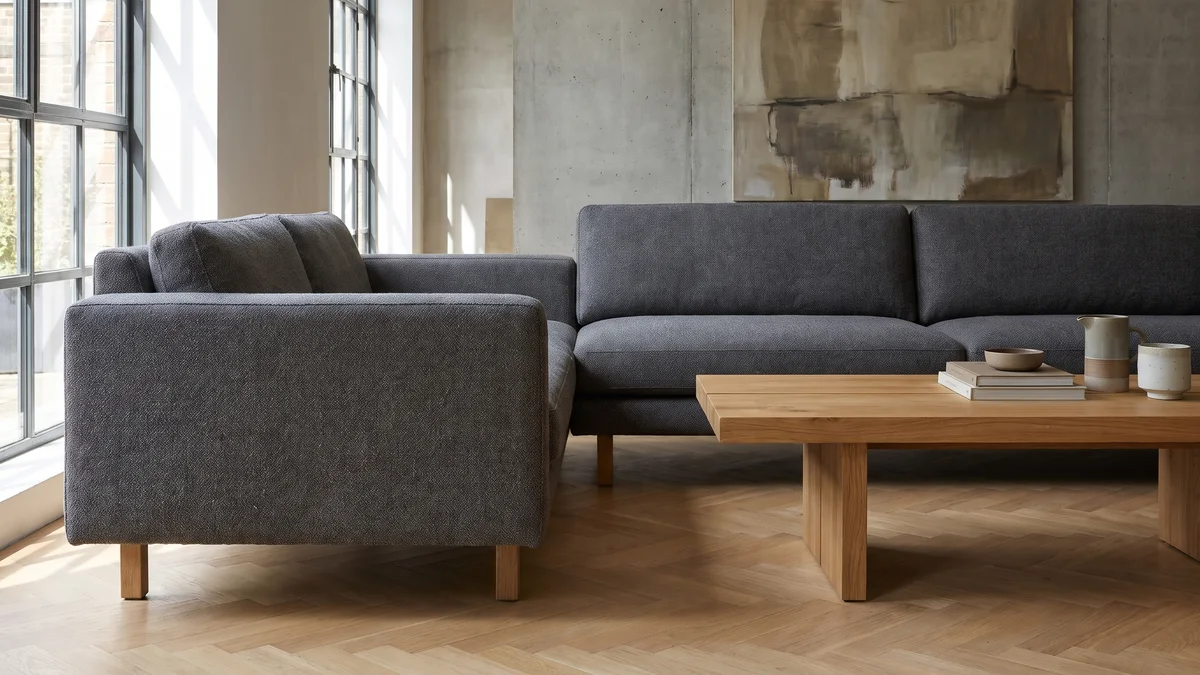
AI illustration by MeltFlex, not to scale.
Coffee table size and distance
Three more numbers recur across the same sources:
- Length: about two thirds of the sofa's length (Chairish and WoodBin say half to two thirds).
- Gap to the sofa: 12 to 18 inches. Ashley prefers 18; Castlery says 14 to 18.
- Lift-top tables solve the eating-height problem. One model, the BDI Reveal, lists an adjustable height of 15.75 to 23.75 inches.
Side table and end table height
The rule: the top of an end table should be level with the sofa arm or just below it. Houzz's version is "equal to or just below the height of the sofa arms" and "err on the side of shorter rather than taller". Tidbits & Twine allows 1 to 2 inches either way.
Here the listings and the rule part company.
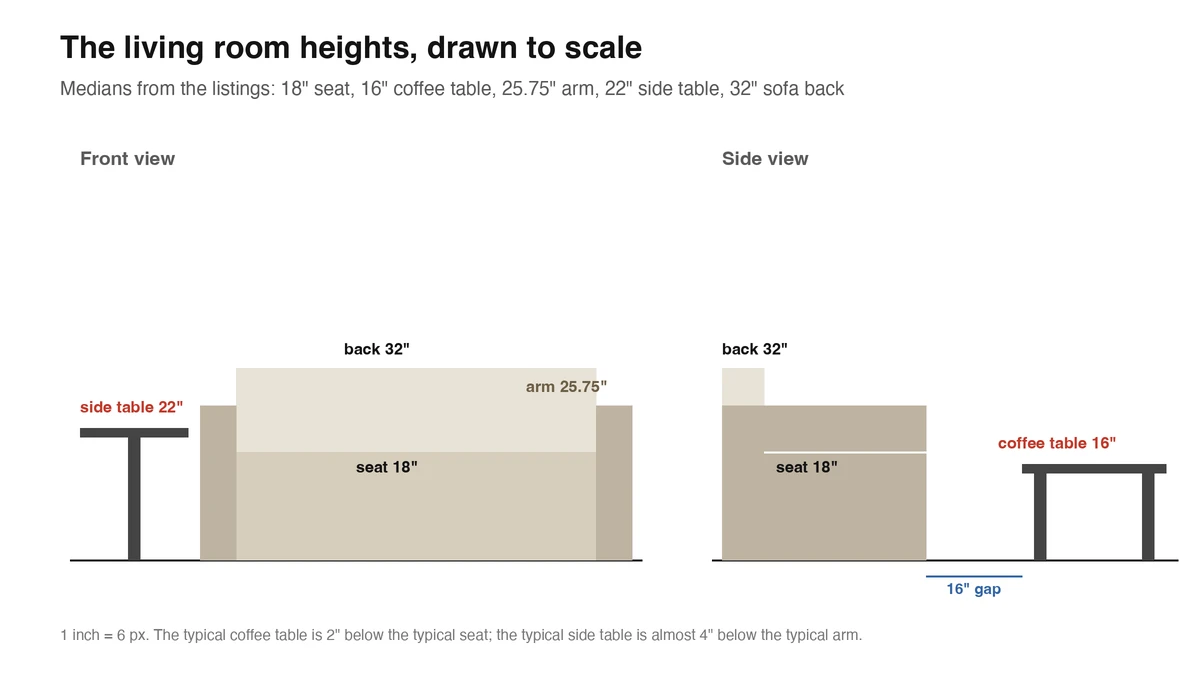
Drawing by MeltFlex, to scale, using the medians from the listings.
- The median sofa arm in our sample is 25.75 inches (108 models, half between 24 and 28).
- The median side table is 22 inches (132 tables, half between 19 and 24).
The typical side table is nearly 4 inches below the typical arm. That is not a mistake by the makers: many side tables are sold for use next to lounge chairs and low-armed sofas, and a lower table is the direction every source says to err in. But if your sofa has a high track arm of 28 inches or more, a 22-inch table will feel low when you reach for a glass, and you should shop by height first. Only about half of the side tables we read (67 of 132) are 22 inches or taller.
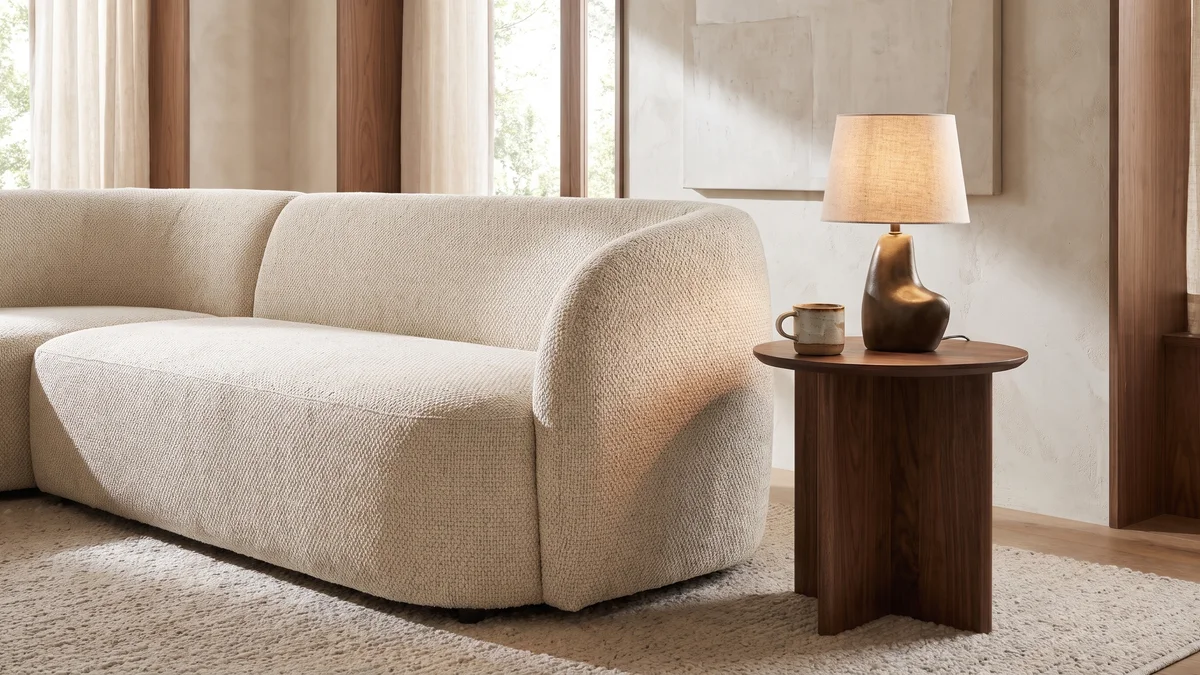
AI illustration by MeltFlex, not to scale.
Dining table height
A standard dining table is 28 to 30 inches high. In practice it is 30: of 158 dining tables we read, 136 (86%) are between 29.5 and 30.25 inches. Only 5 are below 29.
The height is tied to the chair. A standard dining chair seat is about 18 inches, and the comfortable gap between seat and table top is 10 to 12 inches, which is where 30 comes from. Three related numbers:
- Width per person: 24 inches (Castlery, WoodBin, and the National Kitchen and Bath Association).
- Space behind chairs: the NKBA guideline is 32 inches from table edge to wall if nobody walks behind, 36 inches to edge past a seated diner and 44 inches to walk past. The popular "36 inches" is the middle one.
- Under the top: check the apron. A 30-inch table with a deep apron can leave less than 25 inches of knee room. Listings that give "clearance" are telling you this number.
For accessibility, the ADA Standards require dining and work surfaces to be 28 to 34 inches high, with knee clearance at least 27 inches high and 30 inches wide. A typical 30-inch table meets the height; whether it meets the knee clearance depends on that apron.
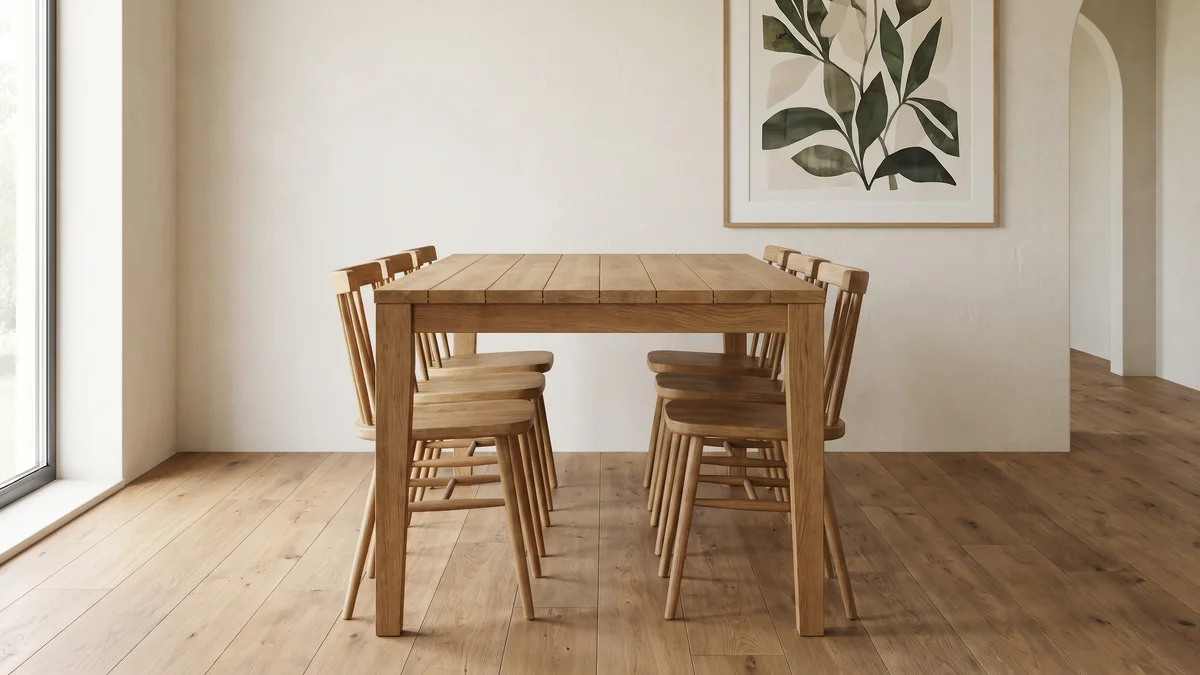
AI illustration by MeltFlex, not to scale.
Is 30 inches actually right?
Not everyone thinks so. The furniture maker Christopher Schwarz argues that "an 18" seat is too dang high for many sitters" and that dining tables should be about 27 inches, with lower chairs to match. Body measurements give him some support: in the US Army's ANSUR II survey, the median lower-leg height (floor to the back of the knee, barefoot) is 16.9 inches for men and 15.2 for women. An 18-inch seat is higher than that for nearly every woman in the sample, even allowing an inch for shoes.
We include this as a minority view worth knowing, not as a recommendation to hunt for a 27-inch table. You would not find one: only 2 of our 158 dining tables are under 28 inches, and the lowest is 26.6.
Desk height
The standard desk is 29 to 30 inches high. Of 68 fixed-height desks we read, 55 (81%) are between 29 and 30.5 inches and one is below 28.5.
This is the standard that fits people worst.
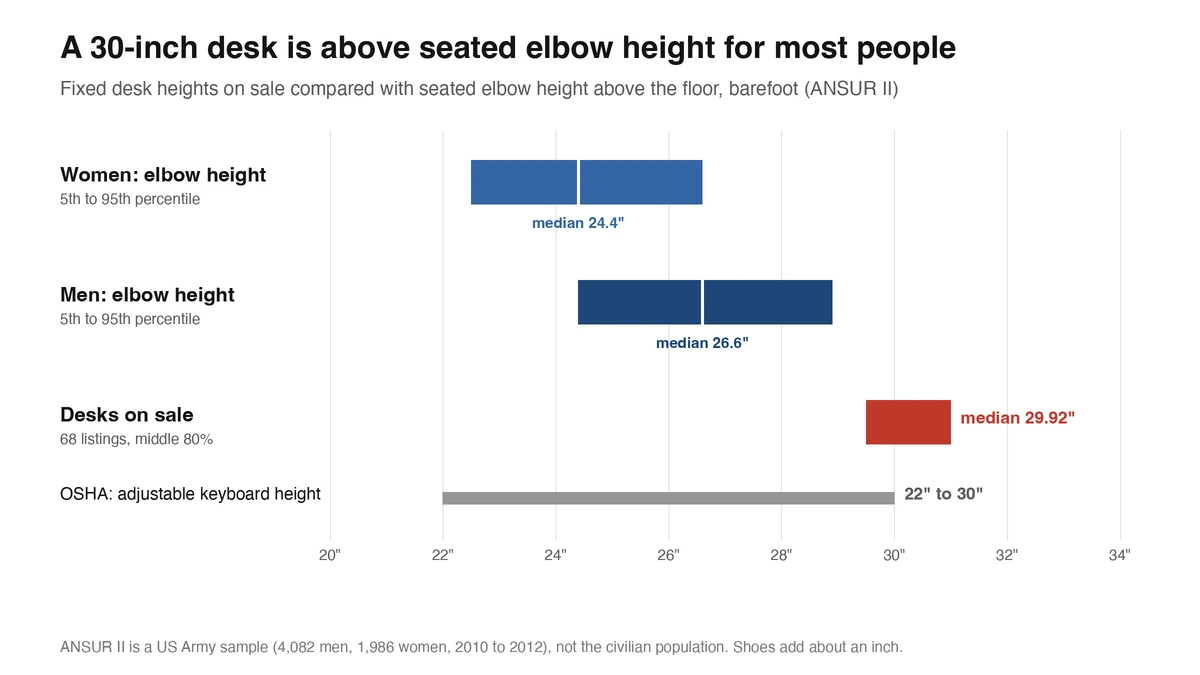
Chart by MeltFlex. Body data: ANSUR II public dataset. Desk data: product pages, 11 November 2026.
For typing, ergonomic guidance wants the keyboard at or slightly below elbow height. We calculated seated elbow height above the floor from the ANSUR II dataset (lower-leg height plus elbow height above the seat, per person). The median is 26.6 inches for men and 24.4 for women, barefoot. Add an inch for shoes and 92% of the men and virtually all of the women in that sample still have elbows below 29.5 inches when their feet are flat on the floor.
Official guidance reflects this, although it does not agree with itself:
- OSHA says keyboard height should be adjustable between 22 and 30 inches for seated work.
- ANSI/HFES 100, as summarised by the University of Washington, recommends a 22 to 30 inch adjustable range, or at least 28.5 inches if the surface is fixed.
- Cornell University's ergonomics group says a flat surface 28 to 30 inches high suits most adults for writing and computer use, while also saying the keyboard should be below seated elbow height.
The way those fit together is that a 30-inch desk is fine for writing and too high for typing unless you change something else. The practical fixes, in order of cost:
- Raise the chair until your elbows are level with the desk top, and add a footrest if your feet no longer rest flat. Canada's occupational health agency says a footrest is "highly recommended" with a non-adjustable desk.
- Add a keyboard tray under the top.
- Buy a height-adjustable desk. The BIFMA guideline range for sit-stand desks is 22 to 50 inches.
Two caveats on our numbers. ANSUR II measures soldiers, who are younger and fitter than the general population, so treat the percentages as indicative. And elbow height is a starting point, not a prescription: taller people and people who mainly write by hand will want a higher surface.
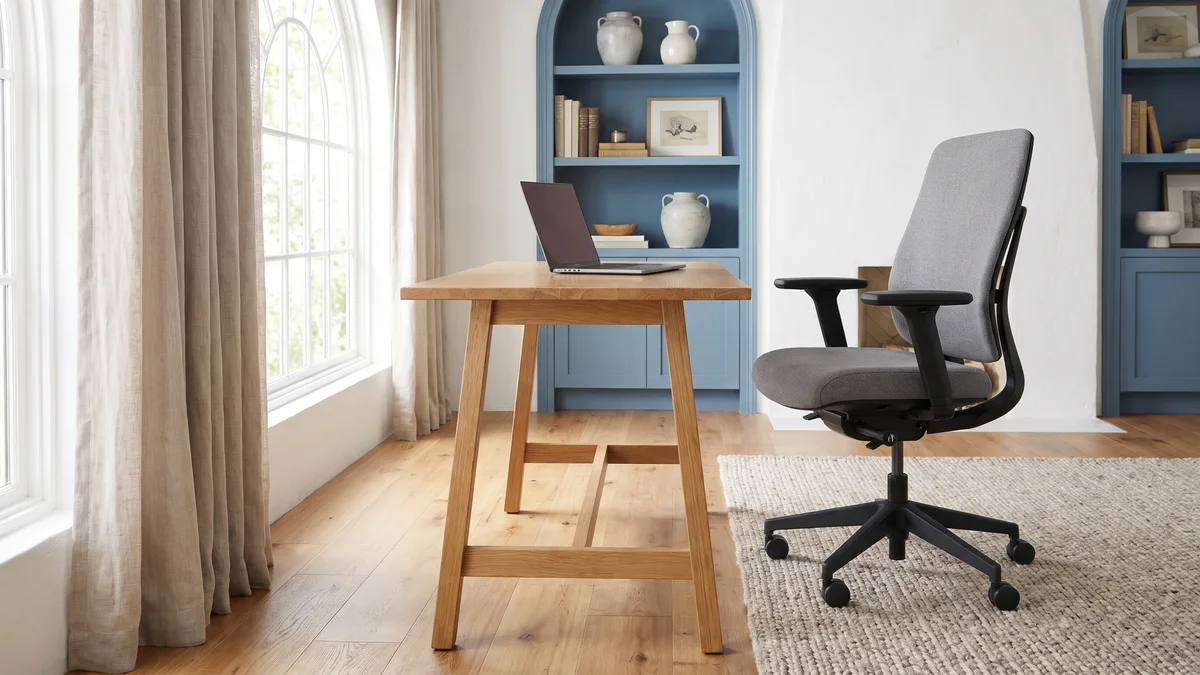
AI illustration by MeltFlex, not to scale. The image model drew this desk noticeably tall, which is a fair picture of how a fixed desk feels to a shorter person.
Nightstand height
The common rule is that a nightstand should be level with the top of the mattress. How much tolerance you get depends on who you ask:
| Source | Tolerance around the mattress top |
|---|---|
| Designer Alex Woogmaster (via Saatva) | Level, or no more than 1 in below |
| Designer Carla Aston | Approximately level |
| Chairish | From 2 in below to 6 in above |
| Designer Lisa Lee (via Saatva) | Within 6 in either way |
The reasoning that makes sense to us: slightly above the mattress is easier to reach from lying down than slightly below, and it stops things being knocked off by a pillow.
Of 133 nightstands we read, the median is 24.2 inches, half are between 23.25 and 26, and 98 (74%) are between 22 and 26. Chairish's "24 to 28 inches" is a little high for the current market: a third of the nightstands (44) are under 24 inches and only 9 reach 28.
The mattress side is where it goes wrong. Casper and Amerisleep both give 25 inches as the standard bed height (floor to mattress top), which matches the median nightstand well. But a platform bed can put the mattress top near 18 inches, and a traditional frame with a box spring and a thick mattress can reach 30 inches or more. Carla Aston notes nightstands are sold in two sizes for that reason, 24 to 26 and 28 to 30 inches. Measure your mattress top before buying, because a low platform bed with a 26-inch nightstand leaves the table 8 inches above you.
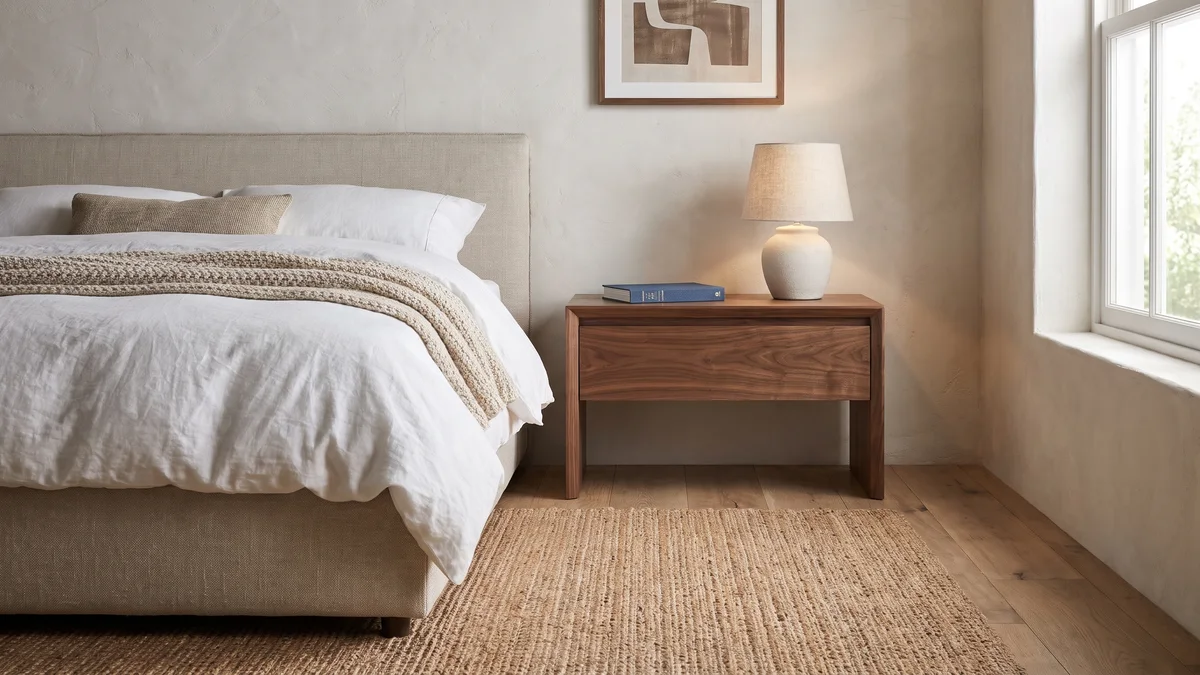
AI illustration by MeltFlex, not to scale.
Console table height
Console and sofa tables run taller than every other occasional table: the median of 88 we read is 31.5 inches, and 56 (64%) are between 28 and 32.
Behind a sofa, the usual advice is level with the sofa back or an inch or two below, so lamps and books do not sit above the cushions. The median overall sofa height in our sample is 32 inches, so a standard console and a standard sofa already line up. Check the back height of low modern sofas: the lowest tenth of our sofas are 28 inches or less, and a 32-inch console will stand above them. We found only weak sources for the console rule, so treat it as convention.
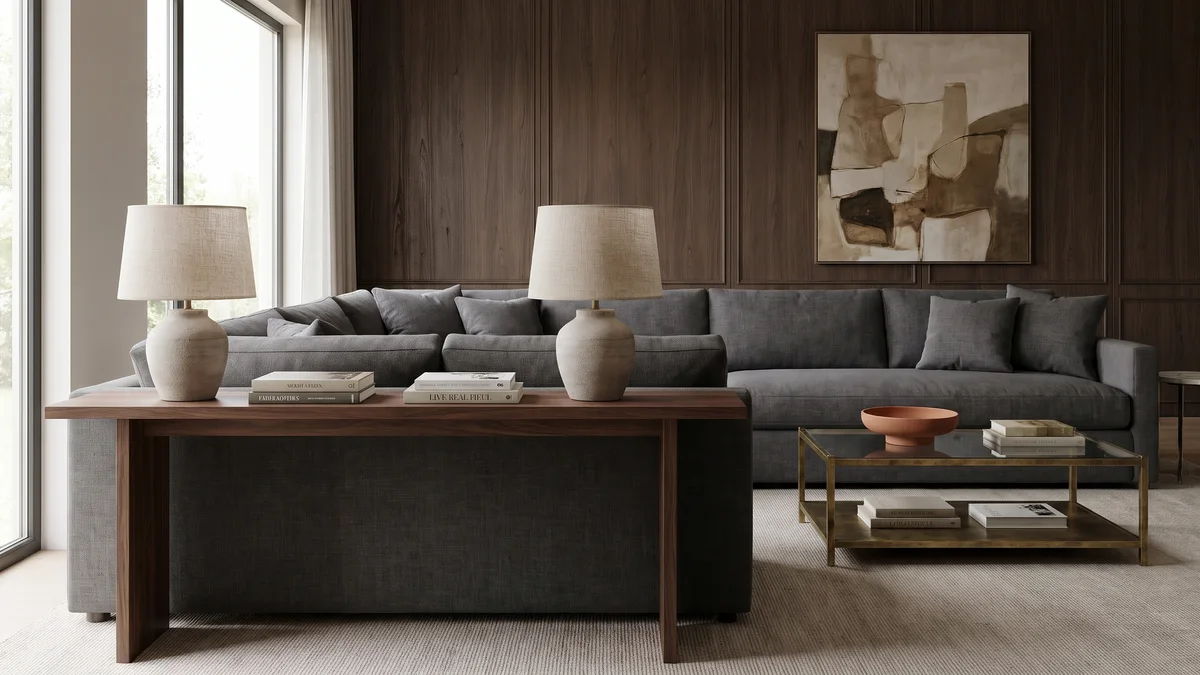
AI illustration by MeltFlex, not to scale.
Counter height, bar height and children's tables
Counter height tables are 36 inches, level with a kitchen counter, with stools around 24 inches. Bar height tables are 42 inches with stools of 28 to 30 inches. The same 10 to 12 inch seat-to-top gap applies at every height, which is the one rule in this guide that never changes.
For children, Community Playthings, a school furniture maker, publishes a chart that pairs seat and table heights:
| Chair seat | 8 in | 10 in | 12 in | 14 in | 16 in | 18 in (adult) |
|---|---|---|---|---|---|---|
| Table top | 16 in | 18 in | 20 in | 22 in | 24 to 26 in | 26 to 30 in |
The gap for small children is about 8 inches, not 12.
How to check heights before you buy
- Measure the thing the table relates to: sofa seat and arm, mattress top, your own seated elbow height.
- Read the full dimension line, not the product title. "Overall" height includes any raised edge or gallery rail.
- Mark it on the wall with painter's tape at the listed height and sit next to it.
- Check proportion as well as height. A table can be the right height and still look wrong if it is too small or too heavy for the room. A photo-based room visualiser such as MeltFlex AI can place a table of a given size in a picture of your own room, which is quicker than returning a 100-pound box.
FAQ
What is the standard table height?
For a dining or work table it is 28 to 30 inches, and nearly always 30 inches in current catalogs. "Table height" on a stool or chair listing means it suits a table of that height, as opposed to counter height (36 inches) or bar height (42 inches).
How tall should a coffee table be?
Between level with your sofa seat and 4 inches below it. For a typical 18-inch seat that means 14 to 18 inches, and the median table on sale is 16.
Can a coffee table be taller than the sofa seat?
It can if you use it for eating or working; some sources accept 18 to 22 inches for that. It looks and feels wrong for lounging. 19 of the 154 tables we read are taller than an 18-inch seat.
What is the standard dining table height in cm?
About 71 to 76 cm, with 75 or 76 cm being the common figure.
What is the standard desk height?
29 to 30 inches (about 74 to 76 cm) for a fixed desk. For typing, most people need either a higher chair with a footrest or a lower keyboard surface.
How tall should a nightstand be?
Level with the top of your mattress or up to a few inches above it. Most nightstands on sale are 22 to 26 inches, which suits a mattress top around 25 inches.
How high should a side table be next to a sofa?
Level with the arm or up to 2 inches below. Many side tables are lower than that, so check the arm height of your sofa first.
How we made this guide
On 11 November 2026 we read product pages and product feeds from six US furniture retailers that publish dimensions as text: Lulu and Georgia, McGee & Co, Poly & Bark, Nathan James, Tribesigns and Edloe Finch. At Lulu and Georgia, the largest catalog, we sampled every second to fourth model in each category; the others were read in full. We kept indoor, fixed-height pieces and removed sets, outdoor furniture, lift-top and adjustable tables, counter and bar height tables and duplicate colours of one model. That left 154 coffee tables, 132 side tables, 133 nightstands, 158 dining tables, 68 desks and 88 console tables (733 in total), plus seat heights for 125 sofa models and arm heights for 108 from three of the retailers.
Limits you should know about. Six retailers are not the whole market: there is no IKEA, Wayfair or Ashley here because their pages could not be read reliably. Two stores supply most of the coffee and dining tables, and almost all sofa data comes from mid-priced and premium brands. Heights were parsed from text by a script, and we discarded values that were clearly a shelf or drawer dimension, so some valid listings were dropped. The body measurements come from ANSUR II, a military sample. The ergonomic interpretation of those numbers is ours.
Sources and further reading
- US Access Board, ADA Standards, sections 902 (dining and work surfaces) and 306 (knee and toe clearance).
- OSHA Computer Workstations eTool: desks and purchasing guide.
- University of Washington EH&S, office ergonomics furniture design guideline (summarising BIFMA G1-2013 and ANSI/HFES 100-2007).
- Cornell University Ergonomics Web, workstation guide. CCOHS, sit/stand desk.
- ANSUR II public dataset, Penn State OPEN Design Lab.
- NKBA, Kitchen Planning Guidelines with Access Standards.
- Coffee tables: Bob Vila, Castlery, Chairish, Ideal Home, Laurel Bern.
- Dining: Castlery on dining table measurements, WoodBin furniture design standards, Christopher Schwarz, The Tyranny of Tables.
- Nightstands and beds: Chairish, Saatva, Carla Aston, Casper on bed height.
- End tables: Houzz via Fox News, Tidbits & Twine.
- Community Playthings, classroom chair and table height guide.
Planning the rest of the room? Our guides to what size rug goes under a bed and the most durable couch fabric use the same read-the-listings approach, our tablecloth size chart and calculator works from 174 of the dining tables measured here, and the AI dining room design guide shows how to test a table size in a photo. Run a furniture business and want help with product data or customer questions? Book a free call.
Image credits: the six interior images and the cover collage are AI illustrations generated by MeltFlex from reference interiors; they are not to scale and do not show real products. Charts and the scale drawing by MeltFlex Solutions.
More articles
Share article