25 ChatGPT Prompts for Contractors That Save Hours
The best tradespeople we know are brilliant on the tools and quietly drowning in everything else. The quotes that need writing after dinner. The review requests they keep forgetting to send. The customer who has gone quiet and probably needs one nudge. ChatGPT will not wire a board or fit a boiler, but it is genuinely good at the paperwork that eats your evenings.
The catch is that most "ChatGPT prompts for contractors" lists you find are useless. They give you "write a marketing plan for my business" and you get back the same generic mush everyone else gets. The difference between a waste of time and a real time-saver is context. Give the model your trade, your area, your customer, and your goal, and it suddenly sounds like you instead of a call centre.
We build AI systems for trades and service businesses, so these are the prompts we actually see save hours, plus an honest section on where ChatGPT will get you in trouble. One rule up front: never trust it with your prices, with regulations, or with anything legal. More on that below.
ChatGPT cannot do the job. It can do almost everything around it.
The one formula that fixes generic answers
If you only take one thing from this article, take this. Generic prompt in, generic answer out. The fix is a simple structure you can reuse for almost anything:
You are helping a [your trade] in [your town or region].
Write a [what you need] for a [type of customer] who wants [their goal].
Use a [plain, friendly] tone. Here are the details: [paste the specifics].
That one habit, naming your trade, your area, and the customer, is what turns ChatGPT from a toy into a tool. Every prompt below already follows it. Swap the bits in brackets for your own details before you hit enter.
Prompts for quotes and estimates
Writing the quote is rarely the hard part. Writing it so a homeowner actually understands it, and says yes, is. These help with the wording, not the numbers. You set the prices.
Turn these job notes into a tidy estimate I can send a homeowner. Group it
into labour, materials and call-out. Explain each line in one plain sentence
so a non-tradesperson understands it. Notes: [paste your notes].
Write a short scope of work for this job: [describe the job]. List what is
included, what is not included, and the assumptions I am making. Keep it
under 200 words and easy to read on a phone.
A customer says my quote is higher than another they got. Write a calm,
confident reply that explains the value without rubbishing the competitor
or sounding defensive. Job: [describe]. My price: [x]. Their price: [y].
I sent this quote three days ago and heard nothing back: [paste quote
summary]. Write a short, friendly follow-up text that nudges them to book
without being pushy. Two sentences maximum.
Suggest a fair payment schedule for this job, split into a deposit and
stages: [describe job and total]. Explain in one line why staged payments
protect both me and the customer.
Prompts for follow-ups and reviews
Reviews win you the next ten jobs, and most trades simply forget to ask. Make it a habit and let ChatGPT write the words.
Write three short text messages I can send after finishing a job to ask for
a Google review. Make them sound like me, not a corporate template. The
customer is [name] and the job was [job].
Write a warm, short public reply to this five-star review, mentioning the
specific job so it does not sound copy-pasted. Review: [paste review].
Write a calm, professional public reply to this negative review. Acknowledge
the issue, do not get defensive, and invite them to contact me directly to
put it right. Review: [paste review].
Write a friendly seasonal message to past customers reminding them to book a
[annual boiler service, gutter clean, safety check] before [season]. Under
60 words, with one clear call to action.
Write a low-pressure message for people who got a quote over a month ago but
never booked. Offer to answer any questions and gently ask if the job is
still on their list.

Most jobs are lost in the silence after the quote, not on price.
Prompts for tricky customers and chasing money
This is the stuff that ruins your evening because you are writing it while annoyed. Let ChatGPT draft the calm version, then you tweak it.
A customer sent this annoyed message: [paste]. Write a reply that stays calm,
takes responsibility where fair, and moves us toward a solution. Do not admit
liability for anything I have not confirmed.
A customer keeps asking me to add extra work that was not in the original
quote. Write a polite reply that holds the line, explains it would be a
separate job, and offers to quote it.
Write three versions of a message chasing an unpaid invoice that is [x] days
overdue: a gentle reminder, a firmer nudge, and a final notice before late
fees apply. Customer: [name]. Amount: [x].
A part is delayed and the job will run [x] days late. Write a proactive
message that tells the customer before they have to chase me, apologises
briefly, and gives a clear new date.
Prompts for local marketing
You do not need a marketing agency to stay visible in your area. You need to post consistently, which is exactly the thing that slips.
Write a short Google Business Profile post about a [job type] I just finished
in [area]. Under 80 words, sound human, and end with a line inviting locals
to get in touch.
Write the copy for a service page about [service] for my [trade] business in
[area]. Include a short intro, what is included, why locals choose me, and a
clear call to action. Simple language, no jargon.
Write a friendly post for a local community Facebook group offering my [trade]
services that fits the no-spam vibe of those groups. Lead with being helpful,
not with selling.
Write five short, scroll-stopping captions for a before-and-after photo of a
[job]. Vary the tone: one proud, one with a quick helpful tip, one with a
light joke.
Someone messaged "how much to do [job]?" with no detail. Write a reply that
gives a rough ballpark range, explains what changes the price, and asks the
two questions I need to quote it properly.
Give me ten short taglines for my [trade] business in [area] for my van or a
flyer. Mix trustworthy, local, and a couple with light humour. Keep each
under six words.

The admin pile is where good days quietly disappear.
Prompts for admin and scheduling
The small stuff. Job sheets, schedules, the message you send when you cannot pick up. Tiny time savings that add up across a week.
Here is a rough voice-note transcript from a site visit: [paste]. Turn it
into a clean job sheet with the customer, the work needed, materials to
order, and next steps.
Write a short, plain-English cancellation and deposit policy I can add to my
quotes as a [trade]. Keep it fair and friendly, not legalese. I will have a
professional check it before I use it.
Here are this week's jobs with rough locations and durations: [paste].
Suggest a sensible order to cut down driving between them, and flag anything
that looks too tight to finish in a day.
Write a short auto-reply for when I cannot answer the phone on a job. Reassure
the caller, set a clear callback expectation, and tell them how to send job
details in the meantime.
Write a simple numbered checklist a new apprentice can follow for [common
task, like arriving at a customer's home and setting up]. Clear actions only,
no waffle.
When NOT to use ChatGPT
This is the part the prompt-pack sellers leave out, and it matters more than any prompt above.
Do not let it set your prices. It does not know your costs, your margins, or your local rates, and it will confidently invent a number. Use it for the wording of a quote, never the figures.
Do not trust it on regulations or codes. Wiring rules, gas regs, building codes and safety standards change, and the model can be out of date or simply wrong. Check current regulations from the proper source, every time.
Do not use it for contracts or legal wording you will rely on. A friendly policy draft is fine as a starting point. Anything that could land in a dispute needs a real professional.
Do not paste private customer data. Names, addresses, phone numbers, payment details. Treat anything you type as if it could be stored, because depending on your settings it can be. Strip the personal bits out.
Get those four wrong and AI costs you money instead of saving it. Get them right and it is a genuinely useful assistant.
From copy-paste to actually automated
Here is the honest limit of everything above. Copy-pasting 25 prompts is still a job. You are the one remembering to ask for the review, to chase the invoice, to send the seasonal reminder. The model helps you write faster, but you are still the engine.
The trades that pull ahead stop copy-pasting the repetitive ones and wire them in instead. The review request fires automatically the day after a job is marked complete. The overdue invoice chases itself. The missed call gets an instant text back so the lead does not ring the next plumber on the list. That last one is worth its own read: see how to stop missing customer calls with AI.
That is the difference between using AI and having AI work for you. One saves you minutes. The other gives you back your evenings.
Frequently asked questions
Can ChatGPT write accurate quotes for my jobs? It can write the wording of a quote beautifully, but not the numbers. It does not know your costs, your suppliers, or your local rates. Put your own prices in and let it handle the explanation.
Is it safe to use ChatGPT for my trades business? Yes for wording, admin and marketing. No for customer personal data, pricing, or anything that depends on current regulations. Never paste names, addresses or payment details, and always verify codes from the official source.
Which ChatGPT plan do contractors need? For everything in this article, the free version is plenty. A paid plan adds longer memory and faster responses, which is nice but not necessary for quotes, follow-ups and posts.
Can I just automate this instead of copy-pasting every time? Yes, and for anything you do every week you probably should. The repetitive jobs, review requests, invoice chasers, missed-call replies, can run on their own. That is exactly the kind of system we build: our AI receptionist answers the calls you miss and texts the lead back before they ring the next contractor.
The takeaway is simple. ChatGPT will not replace your skills, and the generic prompts floating around online will not save you much. But a handful of well-aimed prompts, with your trade and your area baked in, can quietly hand you back a few hours every week.
And when you are tired of being the one who has to remember to send all of them, book a free call and we will show you which parts of your day can run themselves.
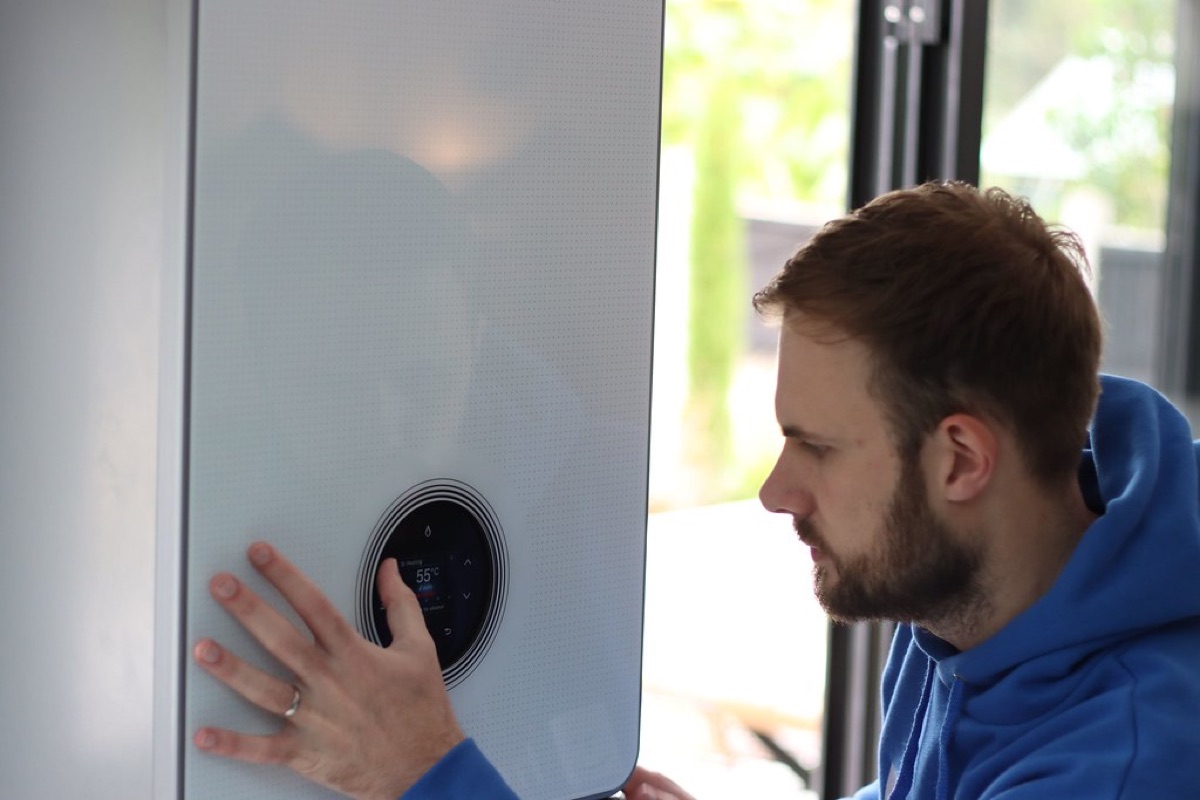
Image credits: "Plumber repairing a combi boiler" by Heatable, licensed under CC BY 2.0. "Browsing Smartphone" by Kristin Hardwick and "Accounting Finance" by Wilfred Iven, both released under CC0 1.0.