AI Interior Design Around Furniture You Are Keeping
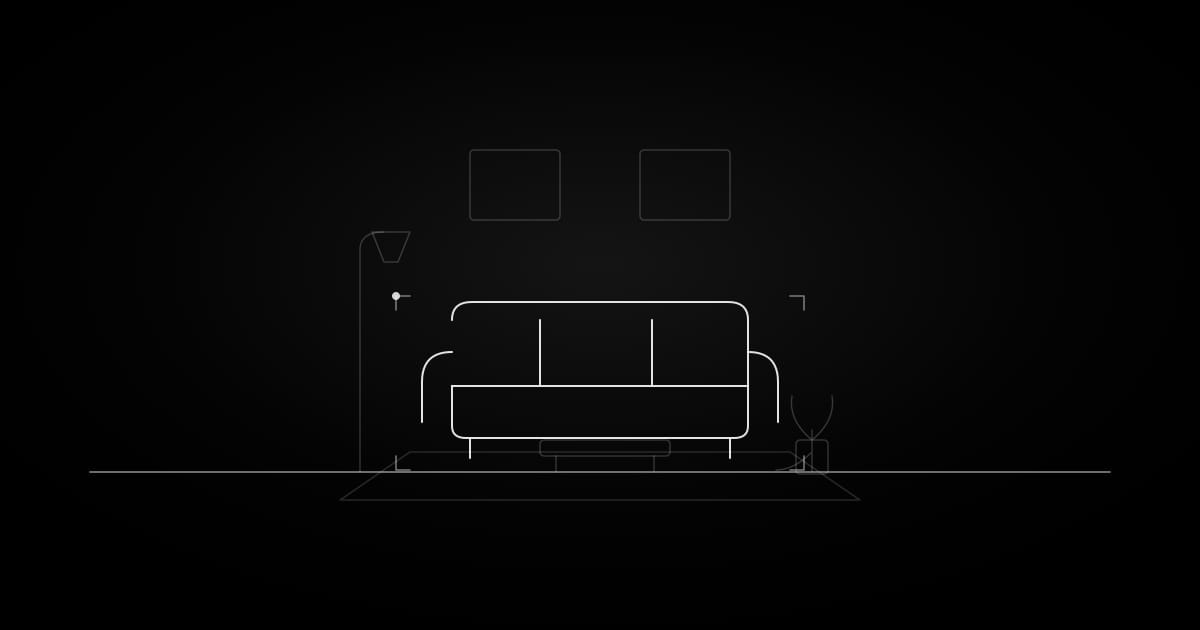
The way interior design is sold, and the way AI tools present it, is a blank room you fill with beautiful new things. The way it actually happens is almost always the opposite. There is a sofa you spent real money on two years ago. A wardrobe from a grandparent that is not going anywhere. A dining table that seats the family and owes you nothing. A kitchen the landlord fitted and you are not allowed to touch. The real design brief is never "what would look good in an empty room," it is "what would look good with this one thing that is staying."
This is the brief AI is worst at hearing, and it is worth understanding why before you fight it.
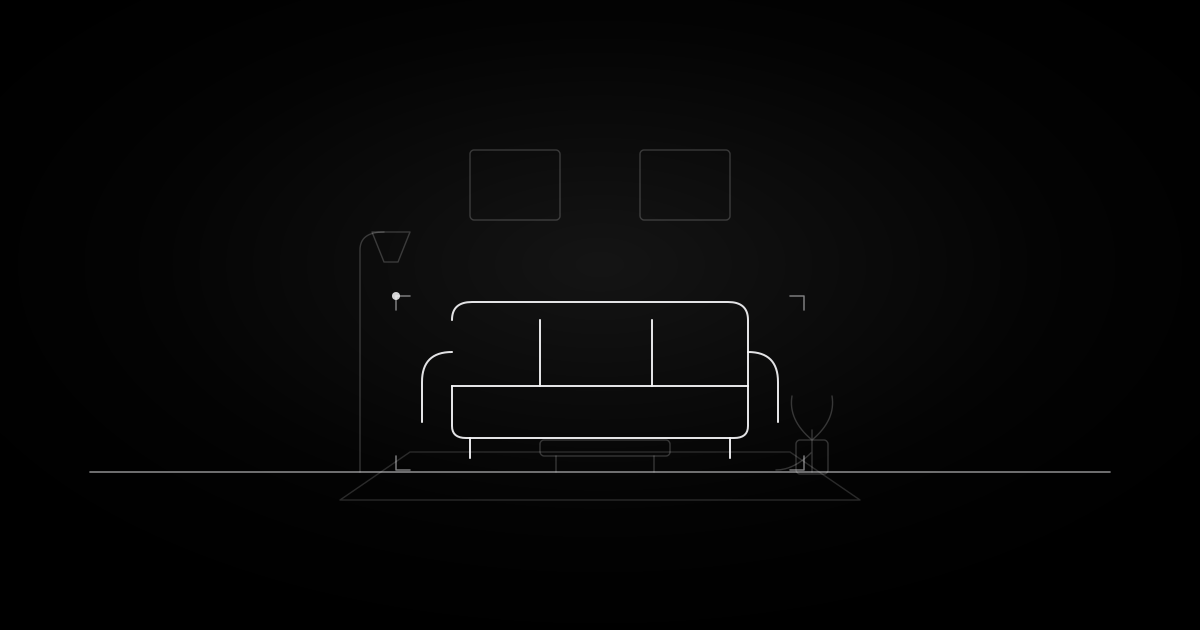
The sofa is the fixed fact of the room. Everything faint around it is still up for debate, and that is the right way round.
Why AI wants to delete the thing you are keeping
To a generative model, restyling a room and refurnishing a room are the same operation. It regenerates the pixels toward something that matches your prompt and its training, and a specific, slightly worn, real piece of furniture is not what its training says a nicely designed room contains. So it "improves" it. Your mid-century teak sideboard becomes a glossy white generic one. Your green velvet sofa becomes a beige boucle because beige boucle is what a million staged photos taught it a sofa looks like.
There is a second, quieter problem: colour anchoring. When you keep a strong-coloured piece, that colour has to lead the whole palette, everything else in the room has to get along with it. A free-form generator does the reverse. It picks a palette it likes and, if the kept item survives at all, leaves it clashing in the corner because the model was never told that the sofa was the constraint, not a variable.
The result is a render that is genuinely lovely and completely useless to you, because the one fixed fact of your room, the item you are actually keeping, is the one thing it changed.
Make the kept piece the anchor, not a casualty
The whole technique is to invert the tool's assumption. Instead of designing a room and hoping your piece fits, you declare the piece first and design everything else to serve it.
Photograph it in place, clearly. Get the kept item well framed and well lit in the source photo, not half cropped in a corner. The model can only preserve what it can clearly see, and a piece it can barely make out is a piece it will happily reinvent.
Name it precisely in the prompt. "Keep the existing dark green velvet three-seat sofa unchanged" does more work than any amount of styling instruction. You are telling the model which object is a constant. Describe its colour, material and rough form so that if it does regenerate, it regenerates toward the real thing.
Let it lead the palette. Ask for schemes that are built around the kept item's colour, not schemes that happen to contain it. A kept forest-green sofa wants warm woods, muted terracotta, brass, cream. Generate two or three palettes that all start from that green and you are choosing between real options instead of fighting the render.
Use the real scale as a gift. This is the upside nobody mentions. A kept piece whose true dimensions you know is a scale ruler dropped into the render. Everything the AI adds can be measured against it, so you catch the coffee table that is secretly a metre too big or the rug that drowns the seating, because you have one object in the frame whose real size you can trust.
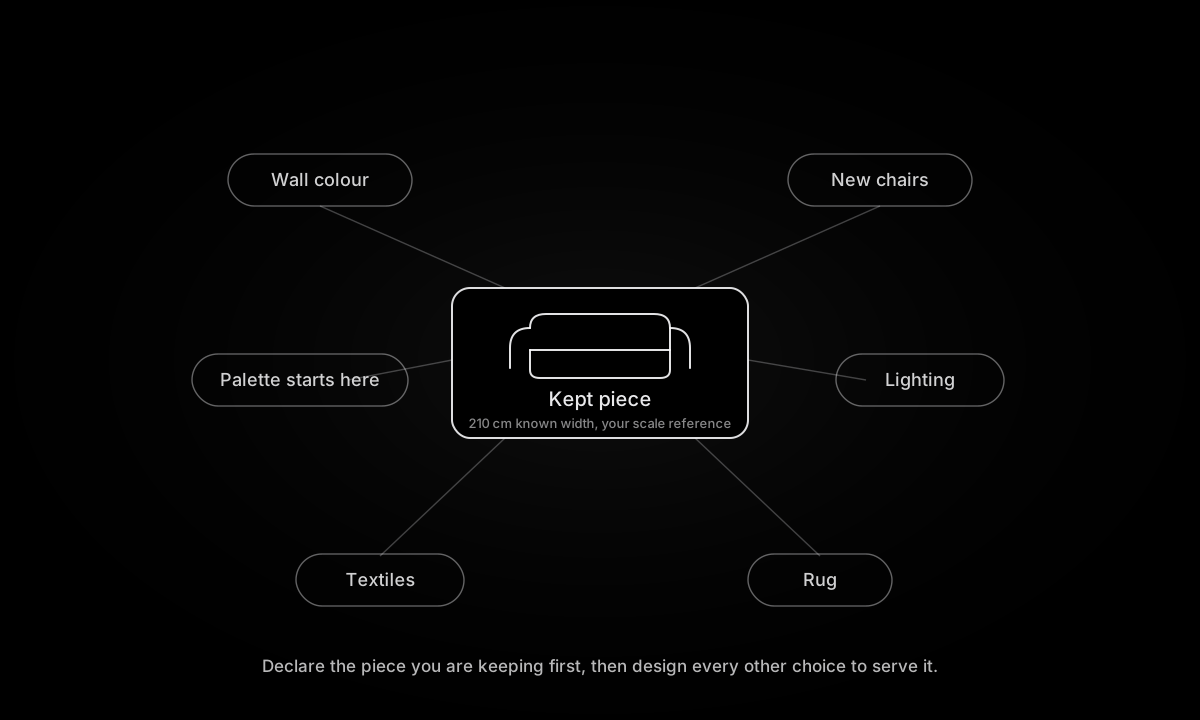
The kept piece sits in the middle and every other decision hangs off it, including the scale reference its known width gives every render.
Where it genuinely helps
Once the anchor is set, AI is very good at the thing that is actually hard here: seeing whether a new scheme gets along with an old piece. Will a bold wallpaper fight your inherited wardrobe or frame it? Does the room want to lean into the sofa's colour or balance it with a contrasting wall? Should the kept dining table be surrounded by matching chairs or deliberately mismatched ones? These are questions of relationship, not invention, and previewing them against the real item in your real room is exactly what a restyle tool can do well.
The video is a useful reference point for the opposite case too. When AI adds furniture it can pull from real, buyable pieces, which means the additions have honest dimensions you can check against the kept item, rather than invented props whose size is anyone's guess.
It is also the fastest way to make peace with a piece you are not in love with. Seeing a slightly dated sofa surrounded by the right paint, lighting and textiles often reveals that the problem was never the sofa, it was everything around it. That is a cheaper conclusion to reach in a render than in a shop.
The limits, stated plainly
It does not know the real clearances. The render can place a new armchair a comfortable-looking distance from your kept sofa and be wrong by 20 cm, blocking a walkway you use every day. The kept item gives you a scale reference, but you still confirm the gaps with a tape measure.
It will drift on long sessions. The more you regenerate, the more likely the model is to slowly morph the kept piece, a shade lighter here, a different leg there, until several renders in it is not your sofa any more. Compare each render back to the original photo of the item, not to the previous render.
It cannot judge condition or repair. Whether a kept piece needs reupholstering to earn its place in the new room is a decision for your eyes in the real room, not for a model that renders everything factory fresh.
The piece you are forced to keep is not the obstacle to a good design. It is the anchor that makes the design specifically yours instead of a catalogue page.
Questions people ask about keeping furniture
Why does AI keep replacing the sofa I told it to keep?
Because to the model, restyling the room and replacing the sofa are the same action, and its training says a nicely designed room contains a new, generic sofa, not your specific one. Frame the sofa clearly in the source photo, describe it precisely in the prompt as an item to keep unchanged, and use a tool that preserves real objects rather than one that redraws the whole scene.
How do I get the new scheme to match an old piece?
Make the old piece lead the palette instead of trying to fit it in afterwards. Ask for colour schemes built around its exact colour and material, generate two or three, and choose between them. A kept forest-green sofa should be pulling the whole room toward the woods and warm neutrals that flatter it, not sitting in a scheme chosen without it.
Can AI tell me if new furniture will fit around what I am keeping?
Only roughly. The kept item gives the render a real scale reference, so oversized additions become obvious, but the model does not know your true clearances. Use it to judge proportion and relationship, then confirm the actual walkways and gaps with a tape measure before you buy anything.
Should I keep a piece I do not love, or replace it?
Try it in a render first. Surrounding a dated piece with the right paint, lighting and textiles often reveals the piece was never the problem, so you keep it and spend the budget elsewhere. If it still looks wrong once everything around it is right, that is your honest signal to replace it, reached before you spent anything.
The honest summary: the strongest rooms are almost never built from nothing, they are built around one or two things that had to stay. AI tools default to the fantasy of the empty room, so the skill is refusing that default, planting your kept piece as the fixed point, and making the machine design toward it. Do that and the item you were stuck with stops being a compromise and starts being the reason the room looks like yours.